
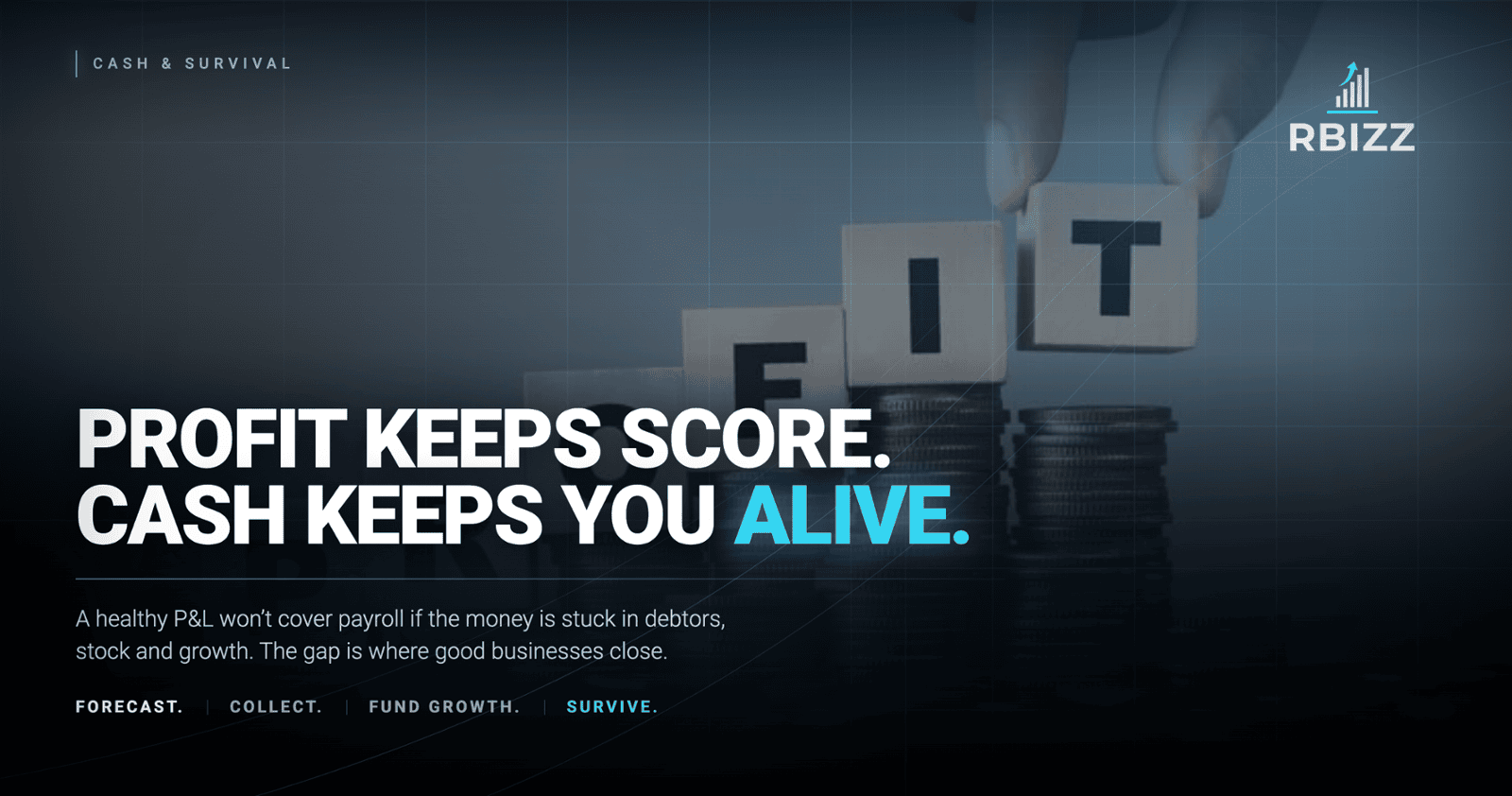
Half the Businesses That Fail Weren't Actually Unprofitable — They Just Ran Out of Cash First
It's a common assumption that a business that fails must not have been making money. Plenty of businesses that collapse were genuinely profitable on paper right up until the end — they simply ran out of actual cash before that profit could ever be collected, which is a completely different and often more preventable problem.
Why Profitable Businesses Still Collapse
Profit is recognised when it's earned. Cash arrives when it's actually paid. A business can have a fantastic quarter on paper while genuinely running out of money to pay wages, because the revenue behind that great quarter is still sitting in unpaid invoices, not in the bank account where it's actually needed.
What Actually Causes This
- Slow-paying customers on a growing book of work. The more the business grows, the more revenue sits waiting to be collected — and growth itself can quietly starve cash flow even while profit climbs.
- No cash buffer to bridge the gap. Without reserves, there's nothing to fall back on during the period between doing the work and actually being paid for it.
- Debt repayments that don't show up as an expense. Loan principal comes straight out of cash, with no corresponding line item reducing the profit figure that makes everything look fine.
Why This Is Preventable, Not Inevitable
Unlike a genuine lack of demand or a failed product, a cash flow collapse in an otherwise profitable business is usually a forecasting and buffer problem — meaning it's one of the more preventable ways for a business to fail, provided someone's actually watching the cash position, not just the profit line.
What to Actually DoWhat to Actually Do
- Build a rolling cash flow forecast, not just a profit and loss review, so gaps are visible weeks in advance.
- Maintain a genuine cash buffer, sized against your real collection cycle, not an arbitrary round number.
- Review payment terms actively — both what you offer customers and what you negotiate with suppliers.
RBizz builds cash flow forecasting specifically to catch this gap before it becomes a crisis, not after. Get in touch if you've never actually modelled how far ahead your cash position is visible.