
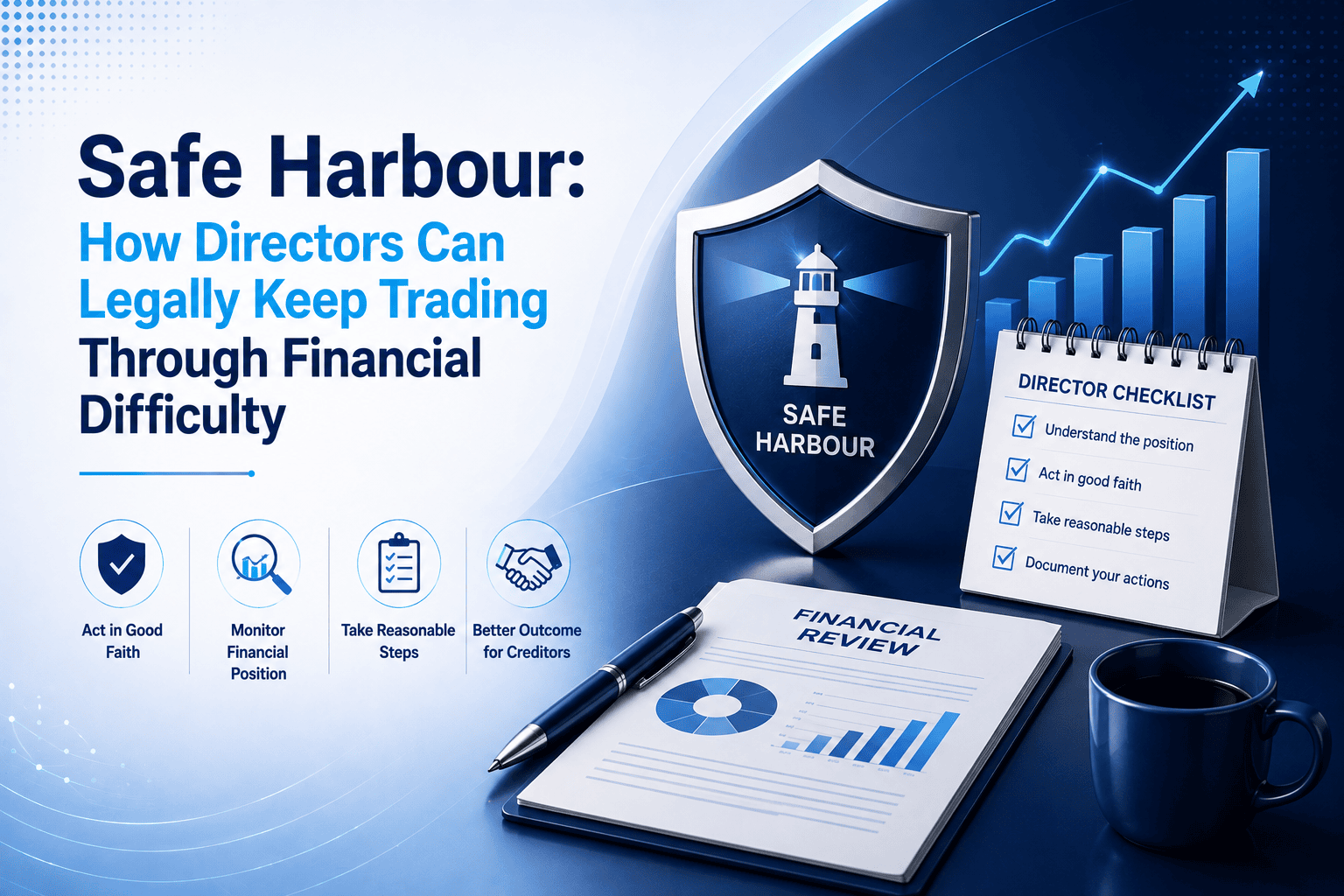
Safe Harbour: How Directors Can Legally Keep Trading Through Financial Difficulty
The Problem Safe Harbour Was Designed to Solve
Without safe harbour, a director facing a genuinely difficult trading period has faced a difficult choice: stop trading and potentially appoint an administrator or liquidator prematurely (even where the business might have been salvageable), or continue trading and risk personal liability if the company is later found to have been insolvent during that period. This created pressure toward premature external administration, sometimes destroying value that could have been preserved with a genuine restructuring effort.
Safe harbour exists to give directors room to attempt a genuine turnaround, without the constant threat of personal liability hanging over every trading decision made during that period.
What Safe Harbour Actually Protects
If the conditions are met, safe harbour protects a director from personal liability for debts incurred during a period where the director was developing and implementing a course of action reasonably likely to lead to a better outcome for the company than immediate administration or liquidation.
This is a conditional protection — it doesn't apply automatically simply because a director believes they're doing their best. Specific requirements need to be met and maintained throughout the relevant period.
The Conditions That Must Be Met
Why This Isn't a Free Pass
Common Misunderstandings
What Directors Facing Financial Difficulty Should Do
Understand Your Protection Before You Need It
If your business is facing genuine financial difficulty, understanding safe harbour — and getting the right advice early — can materially change both the company's prospects and your personal exposure as a director.
RBizz works alongside insolvency and restructuring advisers to support directors navigating financial difficulty — get in touch early if your business is under pressure.