Trust Vesting Date: Why an Old Trust Deed Could Accidentally End Your Trust
Why This Is a Bigger Risk Than It Sounds
Your PAYG instalment amount (or rate, if you're using the instalment rate method) is generally set using your most recently assessed tax return. If this year's income is tracking meaningfully lower — due to a slower trading period, a one-off prior-year gain that isn't repeating, or a genuine change in business circumstances — continuing to pay instalments calculated on last year's higher figure means overpaying throughout the year, even though you'll eventually get it back as a refund or credit at tax time.
For businesses managing cash flow carefully, that overpayment sitting with the ATO rather than in your own accounts for months at a time is a real, avoidable cost.
What Happens When a Trust Vests
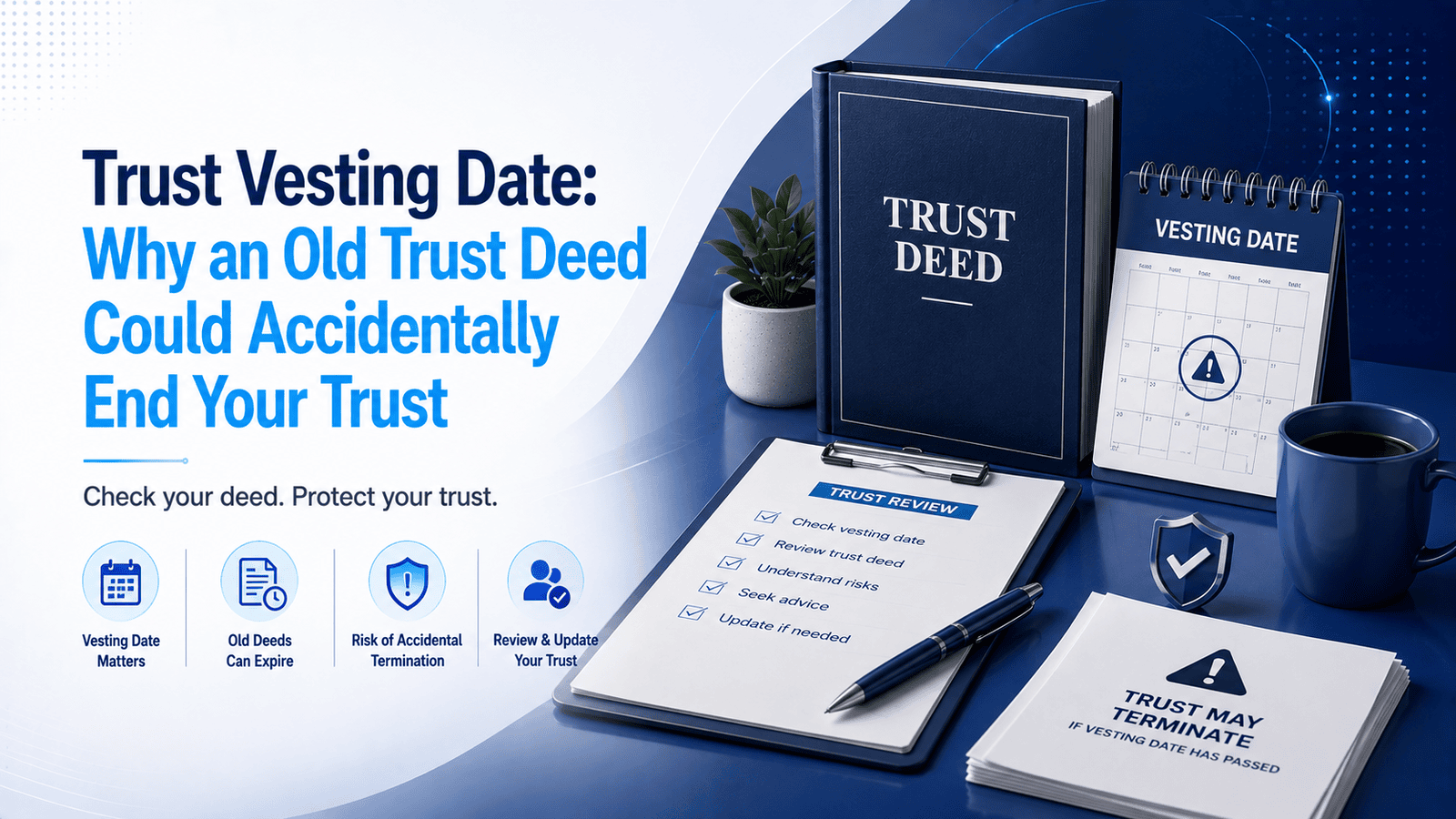
Once the vesting date arrives, the trust generally cannot continue operating as a discretionary trust in its ongoing form. The trust property must be distributed in accordance with the deed's vesting provisions — often to the beneficiaries named or described as default beneficiaries at that specific point, rather than distributed at the trustee's ongoing discretion as it would have been beforehand.
This has significant practical consequences:
- Loss of the trustee's discretionary distribution power, since post-vesting, income and capital are generally required to be dealt with as fixed entitlements under the vesting provisions, not discretionary decisions made each year.
- A potential CGT event, since the change from a discretionary interest to a fixed, vested entitlement can, in some circumstances, trigger capital gains tax consequences on the underlying trust assets.
- Unintended beneficiaries receiving entitlements, if the deed's default vesting provisions don't reflect who the family or business intends to benefit today, particularly if the deed hasn't been reviewed since it was drafted decades earlier.
- Stamp duty implications, depending on the state and the nature of the assets involved, since a change in beneficial ownership arising from vesting can potentially trigger duty in some circumstances.
Can the Vesting Date Be Extended?
Why Business Owners Should Check This Now, Not Later
What to Check Right Now
Don't Let a Decades-Old Date Catch You Out Today
If your business operates through a trust structure — particularly one established more than a couple of decades ago — it's worth confirming the vesting date now, while there's still time to act if a problem exists.
RBizz reviews trust deeds to confirm vesting dates and advises on extension options well before they become urgent — get in touch to check your trust's position.