
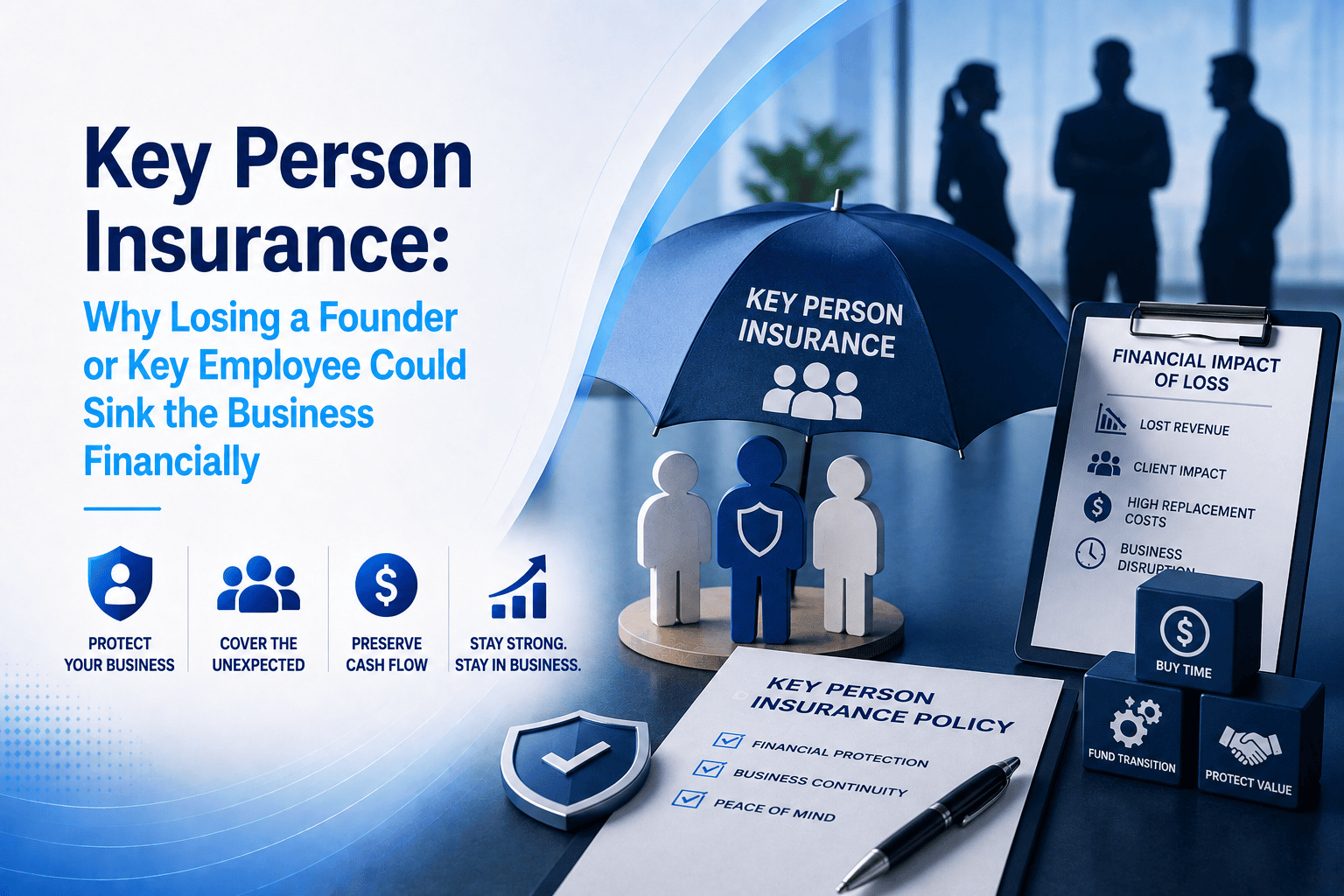
Key Person Insurance: Why Losing a Founder or Key Employee Could Sink the Business Financially
What "Key Person" Actually Means
A key person isn't necessarily the most senior title-holder — it's whoever's loss would create a genuine, material financial impact on the business. This commonly includes:
- Founders or majority shareholders, particularly where the business's client relationships, reputation, or strategic direction are closely tied to that individual
- Technical specialists or top revenue generators, whose specific expertise or client relationships aren't easily or quickly replaced
- Anyone whose departure would trigger a loan covenant issue, since many business loans and finance facilities include conditions tied to key management remaining in place
What the Financial Impact Actually Looks Like
If a key person dies or becomes permanently unable to work, the business can face several compounding financial pressures simultaneously:
- Lost revenue during the disruption period, particularly where that person was directly responsible for significant client relationships or sales
- Recruitment and replacement costs, which for a genuinely specialised or senior role can be substantial and take considerable time to resolve
- Reduced creditworthiness or loan covenant breaches, if lenders had extended finance partly on the basis of that individual's ongoing involvement
- Client and supplier confidence issues, since key personal relationships often underpin commercial trust in smaller businesses specifically
- Potential need to buy out a deceased shareholder's estate, if that person held equity and the business needs to fund a buyout to keep control with the remaining owners
How Key Person Insurance Actually Works
The business itself takes out and pays for a life insurance and/or total permanent disability policy on the key individual, with the business (not the individual's family) as the beneficiary. If the insured event occurs, the payout goes to the business, providing funds specifically intended to cover the financial disruption — recruitment costs, revenue shortfall, loan repayment, or a shareholder buyout, depending on how the policy is structured and sized.
This is a genuinely different arrangement from ordinary personal life insurance a key individual might hold privately for their own family's benefit — key person insurance is specifically structured around the business's financial exposure, not the individual's personal estate planning.
How Much Cover Is Actually Needed
There's no single formula, but common approaches to sizing key person cover include:
- A multiple of the key person's contribution to revenue or profit, reflecting the likely financial impact of their absence over a reasonable recovery period
- The cost of recruiting and training a suitable replacement, including any period of reduced productivity during the transition
- Outstanding loan balances tied to covenants involving that individual's ongoing role
- The value of that person's shareholding, if a share buyout would be needed and isn't otherwise funded through a separate mechanism (such as a specific buy-sell agreement)
Where Businesses Commonly Get This Wrong
What to Check in Your Business
Protect the Business, Not Just the Individual
Key person insurance isn't about placing a value on someone's life — it's about ensuring the business itself has the financial resources to manage a genuinely disruptive event without that disruption compounding into a broader financial crisis for everyone else who depends on the business.
RBizz can connect you with insurance specialists to review your key person risk and appropriate cover levels — get in touch to check your current position.