
Blog categorized as Guides

Equity granted to employees isn't taxed like ordinary salary, and startups often assume any equity grant automatically qualifies for concessional treatment without checking the actual eligibility criteria.
RBizz Team
29/08/2026 11:23 PM - Comment(s)
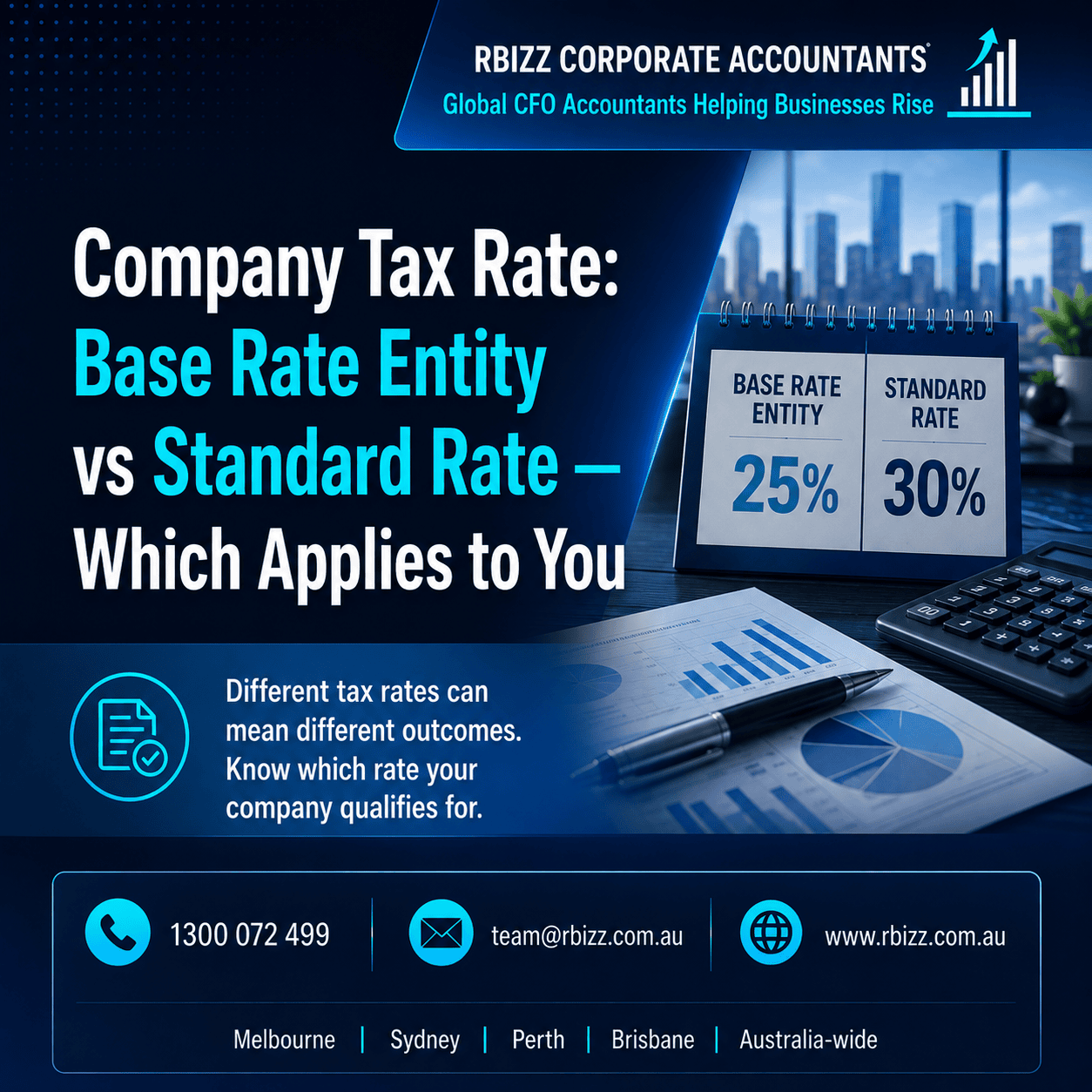
Companies must pass both an aggregated turnover test and an 80% passive income test to access the lower 25% rate, and both need to be checked every single year — not assumed to carry forward.
RBizz Team
29/08/2026 11:23 PM - Comment(s)

Cyber insurance policies vary significantly in scope, and exclusions like unmaintained security standards, social engineering scams, and prior known vulnerabilities can leave businesses without coverage exactly when a claim matters most.
RBizz Team
29/08/2026 11:23 PM - Comment(s)

The small business restructure rollover lets eligible businesses change legal structure without an immediate CGT hit, provided the same owners retain economic ownership and the change is timed separately from any actual sale.
RBizz Team
23/08/2026 12:23 AM - Comment(s)

The loss of a founder or critical employee creates compounding financial pressure — lost revenue, recruitment costs, potential loan covenant breaches, and possibly a forced shareholder buyout — that ordinary business insurance doesn't address.
RBizz Team
23/08/2026 12:23 AM - Comment(s)

Payment redirection scams increasingly hinge on whether a business had reasonable verification processes in place, not just on the scammer's sophistication — and the fix is a documented, independent-channel verification step, not just staff vigilance.
RBizz Team
21/08/2026 10:16 AM - Comment(s)

Paying a contractor doesn't automatically transfer IP ownership the way employment does — Australian law requires an explicit assignment clause, and without one, businesses may only hold a limited licence to use work they paid to have created.
RBizz Team
21/08/2026 10:13 AM - Comment(s)

Courts start from a position that restraint of trade clauses are void unless proven reasonable, and an overly broad clause risks being struck out entirely rather than simply narrowed — which is exactly why cascading, stepped clauses exist.
RBizz Team
20/08/2026 07:40 PM - Comment(s)

A company lease doesn't protect a director personally once a landlord requires a personal guarantee, and the scope often extends well beyond rent — covering make-good costs, option periods, and holding over, with liability that doesn't end just because the director resigns.
RBizz Team
20/08/2026 03:16 PM - Comment(s)
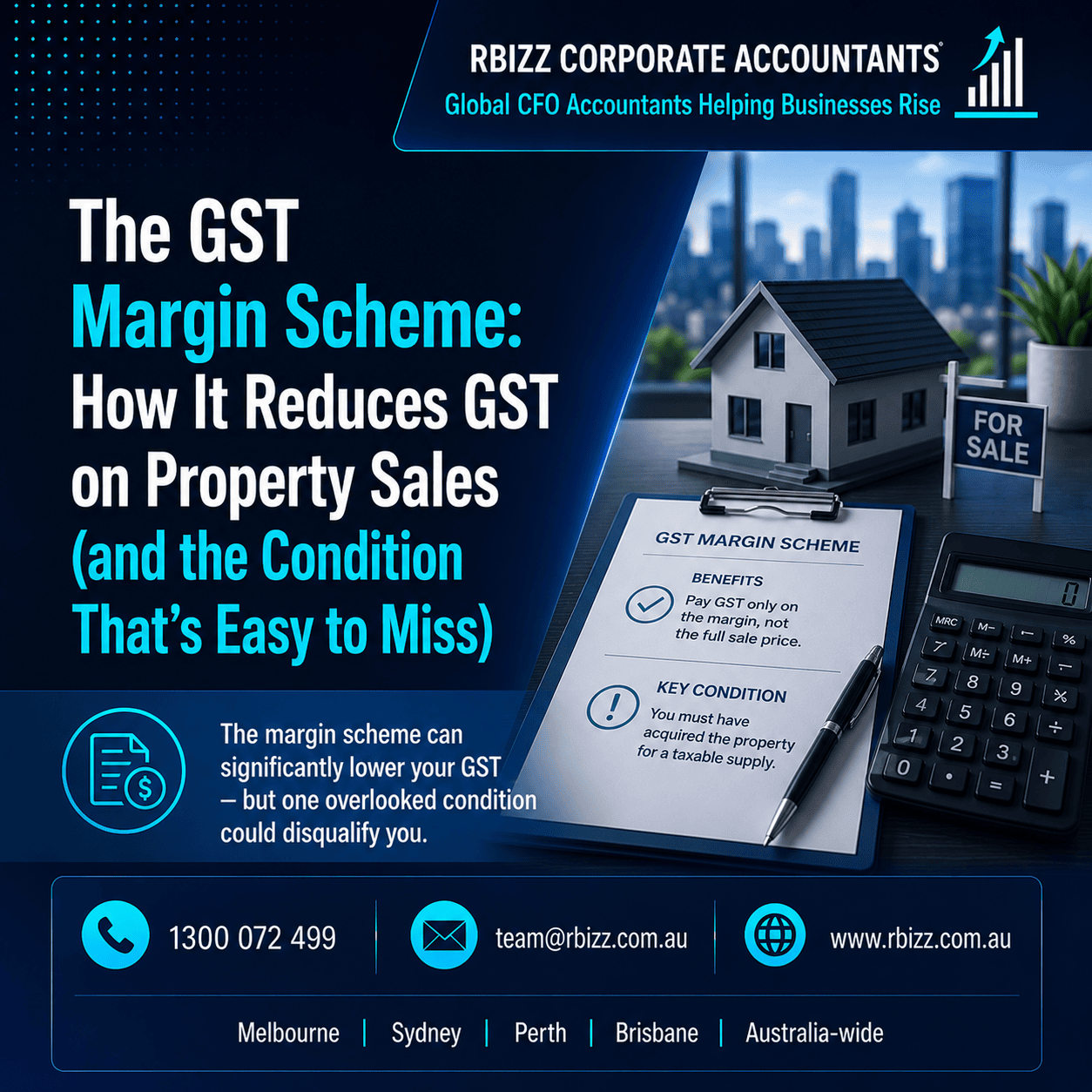
The margin scheme can significantly cut GST on a property sale by taxing only the margin rather than the full price, but it requires a written agreement between buyer and seller before settlement — miss that, and it can't be applied retroactively.
RBizz Team
17/08/2026 04:17 PM - Comment(s)

A retention of title clause in your terms and conditions generally isn't enough on its own to protect your goods if a customer becomes insolvent — without a PPSR registration, a liquidator can treat your goods as part of the general asset pool.
RBizz Team
17/08/2026 04:17 PM - Comment(s)

Going concern GST-free treatment on a business sale requires six specific conditions to all be met — miss even one, like retaining a "minor" asset the buyer actually needs, and GST applies to the full sale price
RBizz Team
13/08/2026 04:51 PM - Comment(s)

PAYG instalments are based on last year's income, so a genuine drop this year means overpaying — but varying the instalment down carries a real penalty risk if the estimate turns out to be significantly understated.
RBizz Team
13/08/2026 04:49 PM - Comment(s)
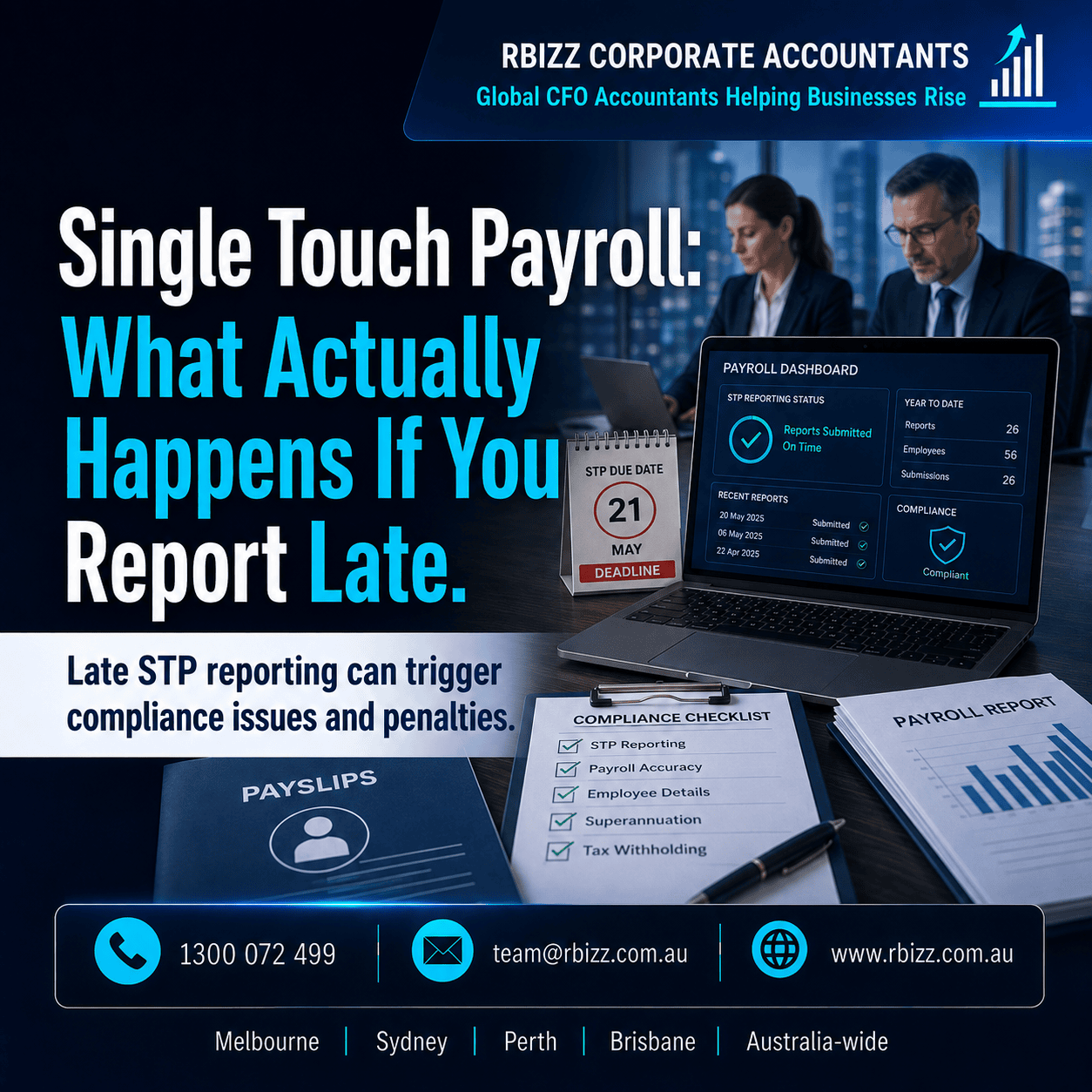
STP reporting is tied to each pay day itself, not a periodic deadline like BAS — and businesses often misjudge this because it feels like other, less time-sensitive obligations. This
RBizz Team
11/08/2026 12:34 PM - Comment(s)
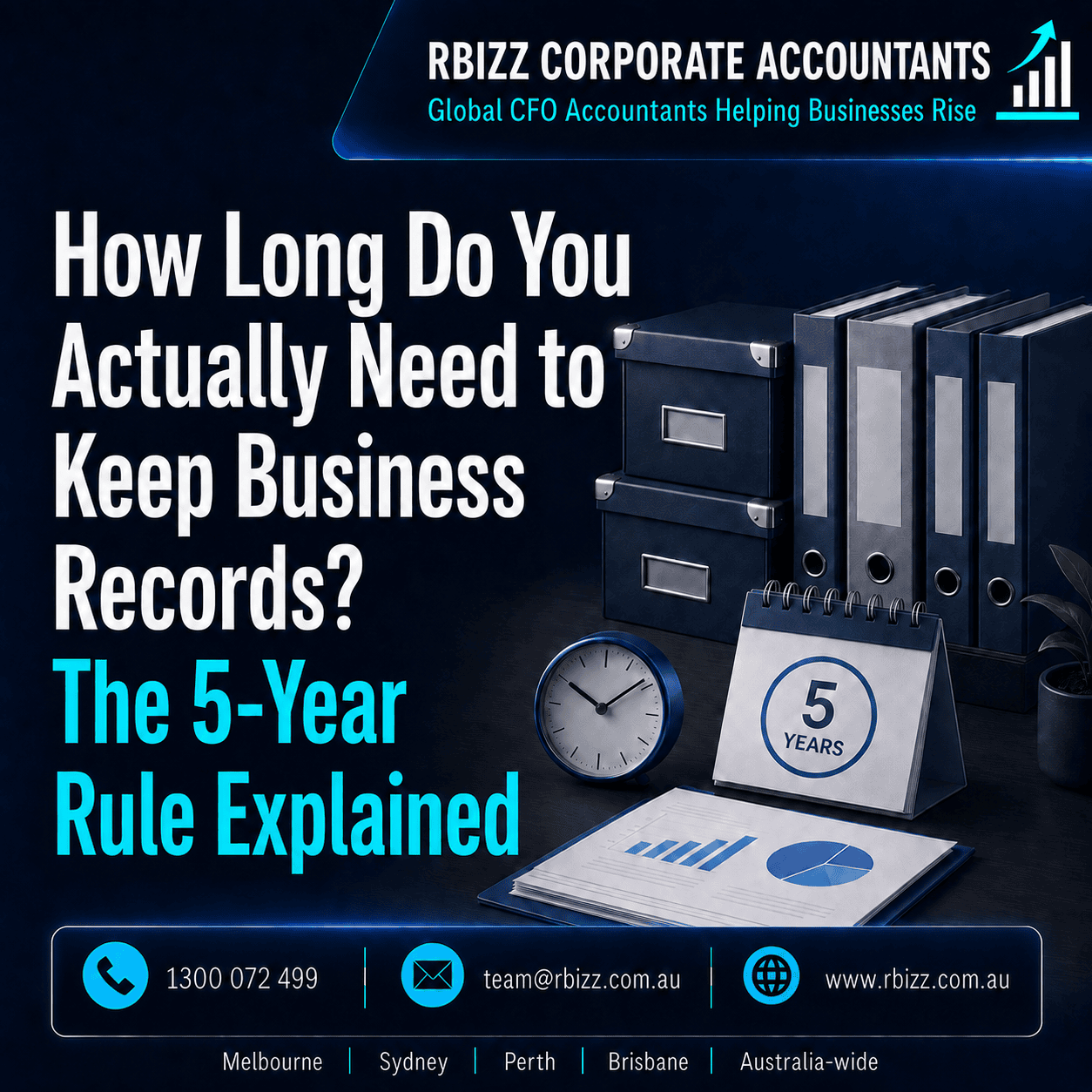
The 5-year record retention rule sounds simple, but the clock starts from when you lodge the relevant return — not the transaction date — and some records (depreciating assets, CGT) need to be kept well beyond 5 years.
RBizz Team
10/08/2026 04:14 PM - Comment(s)

Business owners with irregular income are particularly likely to exceed a super contribution cap without realising, since multiple contribution sources can stack up unnoticed.
RBizz Team
07/08/2026 12:09 AM - Comment(s)

This offset is capped at $1,000 per person and calculated as a percentage of tax payable on business income — not a percentage of profit, which is the mistake that trips most people up.
RBizz Team
07/08/2026 12:08 AM - Comment(s)

Equity granted to employees isn't taxed like ordinary salary, and startups often assume any equity grant automatically qualifies for concessional treatment without checking the actual eligibility criteria.
RBizz Team
05/08/2026 05:13 PM - Comment(s)

The tax consequences of a business sale depend heavily on whether it's structured as a share sale or asset sale, and pre-sale restructuring can itself trigger unexpected tax events if not carefully planned.
RBizz Team
05/08/2026 04:06 PM - Comment(s)

Most government grants are assessable income by default, but specific programs can be legislated with different tax treatment — assuming either "automatically tax-free" or "automatically taxable" can lead to a real surprise at tax time.
RBizz Team
04/08/2026 12:04 PM - Comment(s)
Categories
- News Alerts
(103)
- Templates
(2)
- Guides
(280)
- Blogs
(152)
- Courses
(0)
- Health Checks
(0)
- Calculators
(0)
- Videos
(0)
- Compliance
(65)