
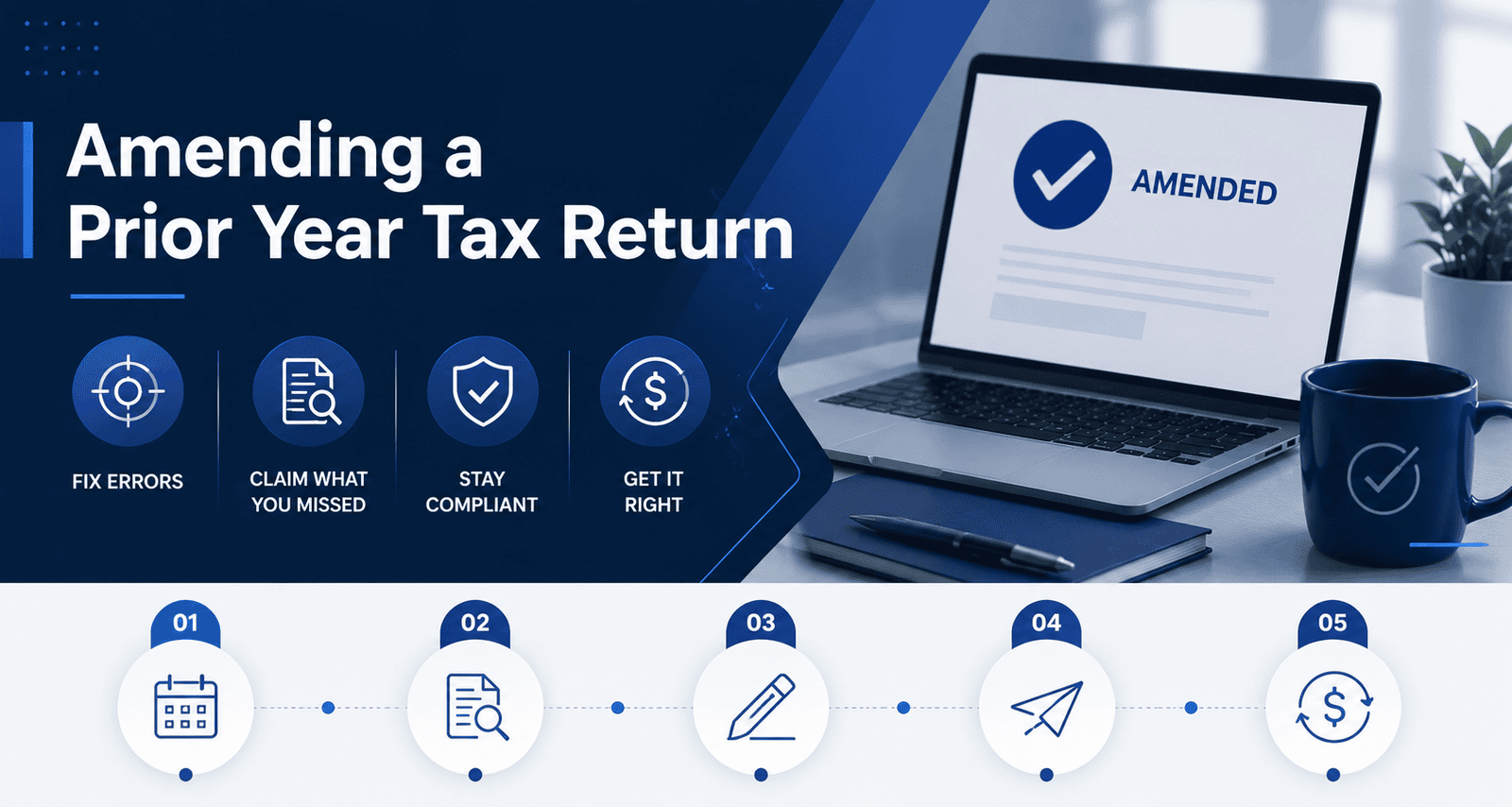
Amending a Prior Year Tax Return: When and How It's Done
Tax season has a way of surfacing things after the fact. A return gets lodged, and a few weeks later a missed deduction, an overlooked income source, or a data entry error comes to light. It's a more common situation than most business owners expect — and in most cases, it's entirely fixable.
The key is understanding when an amendment is possible, how the process works, and what it means for your outstanding tax position either way.
When You Can Amend a Return
Businesses and individuals are generally able to request an amendment to a previously lodged tax return within a set time limit, which depends on the entity type:
- Individuals and small businesses typically have a standard amendment period of a set number of years from the date the original notice of assessment was issued.
- Larger businesses may have a different (often shorter) amendment period, depending on their classification.
- Certain circumstances — such as fraud or evasion — can extend the period the ATO can review or amend a return, in either direction.
Because these time limits vary and are periodically reviewed, it's worth confirming your specific amendment period with a registered tax agent before assuming a correction is (or isn't) still possible.
Common Reasons Businesses Amend a Return
How the Amendment Process Generally Works
Why Acting Early Matters
Amendments initiated voluntarily, before the ATO identifies the issue independently, are generally viewed far more favourably than errors uncovered through a compliance review. Voluntary disclosure can also reduce or eliminate penalties that might otherwise apply, even where interest on any additional tax is still payable.
Waiting doesn't reduce the amount owed — it usually increases it, through accruing interest, and removes the goodwill that comes from raising the issue proactively.
What to Do If You Think a Past Return Needs Correcting
If something's come to light — a missed deduction, an income discrepancy, or simply uncertainty about whether a prior return was handled correctly — it's worth a review before assuming it's too late or too complicated to fix. In most cases, it's neither.
RBizz reviews prior-year returns and manages the amendment process directly with the ATO — schedule a free consultation if something doesn't look quite right.