
Company Tax Rate: Base Rate Entity vs Standard Rate — Which Applies to You
What Makes a Company a "Base Rate Entity"
A company qualifies for the lower 25% rate as a base rate entity if it meets both of these tests for the income year:
1. Aggregated turnover test: the company's aggregated turnover — including the turnover of connected entities and affiliates, not just the company on its own — must be below the relevant threshold (confirm the current threshold, as this figure is periodically reviewed).
2. Passive income test: no more than 80% of the company's assessable income for the year can be "base rate entity passive income" — which includes things like dividends, interest, rent, royalties, and net capital gains. If more than 80% of income comes from these passive sources, the company doesn't qualify for the lower rate, even if turnover is well under the threshold.
Where This Trips Companies Up
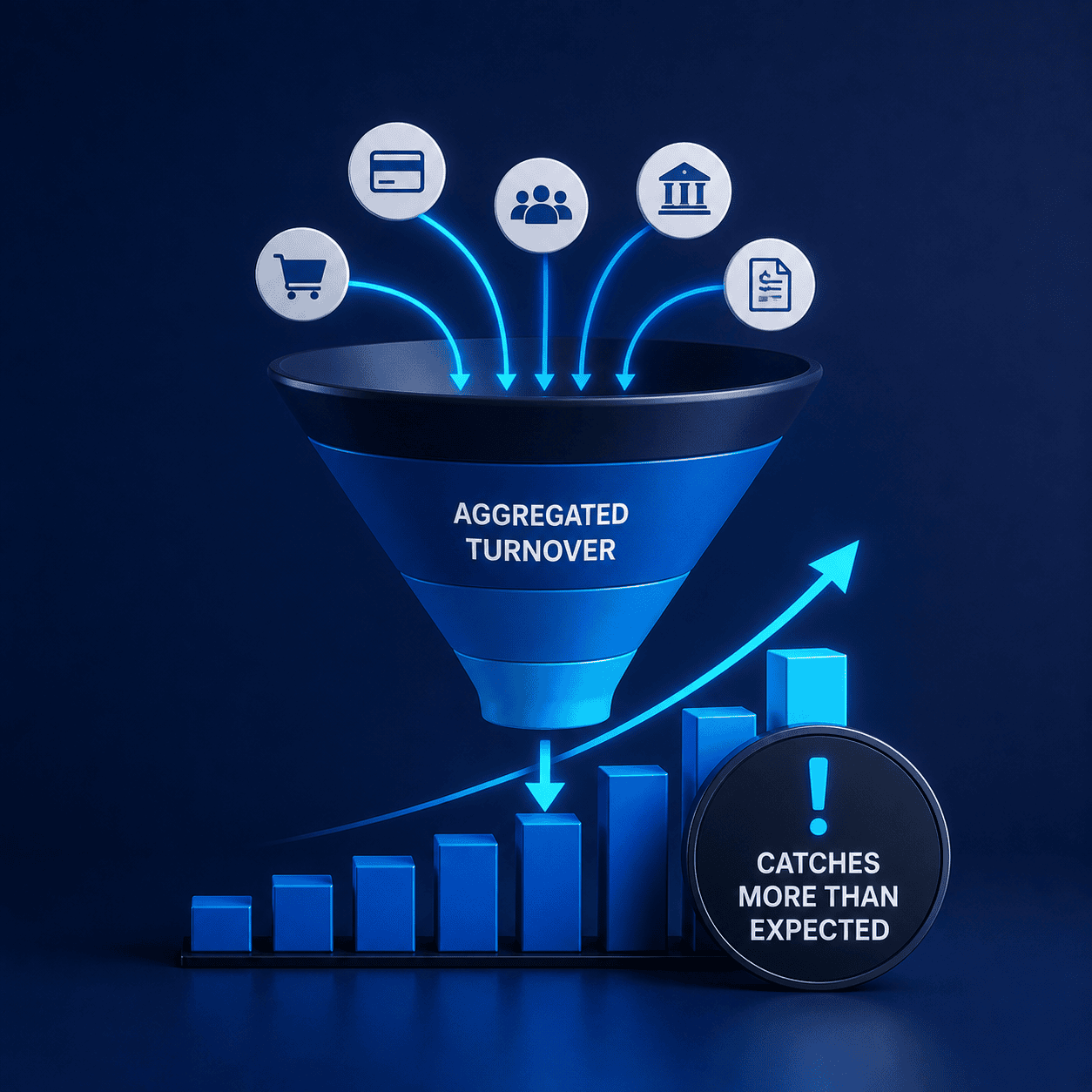
Aggregated turnover catches more than expected. If your company is connected to or affiliated with other entities — related companies under common control, for example — their turnover counts toward your aggregated turnover test, even if your own company's individual turnover is small. A company with modest direct revenue can still fail this test if it's grouped with other entities that push the combined figure over the threshold.
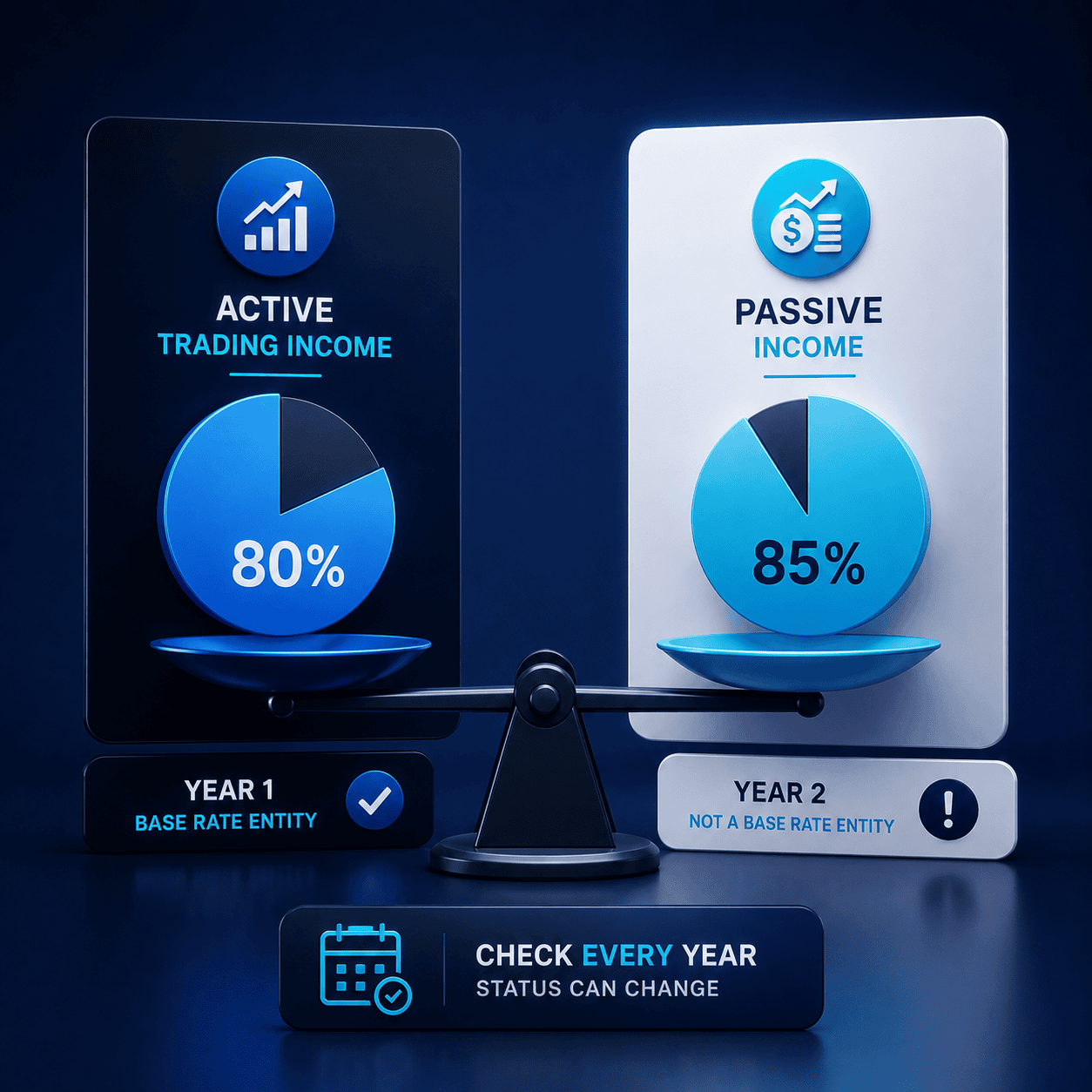
The passive income test can shift year to year. A trading company that has a quiet year with a large one-off capital gain or significant interest income can inadvertently breach the 80% passive income threshold for that specific year, even though its usual business is squarely active trading income. This means base rate entity status isn't necessarily a permanent classification — it needs to be checked every year.
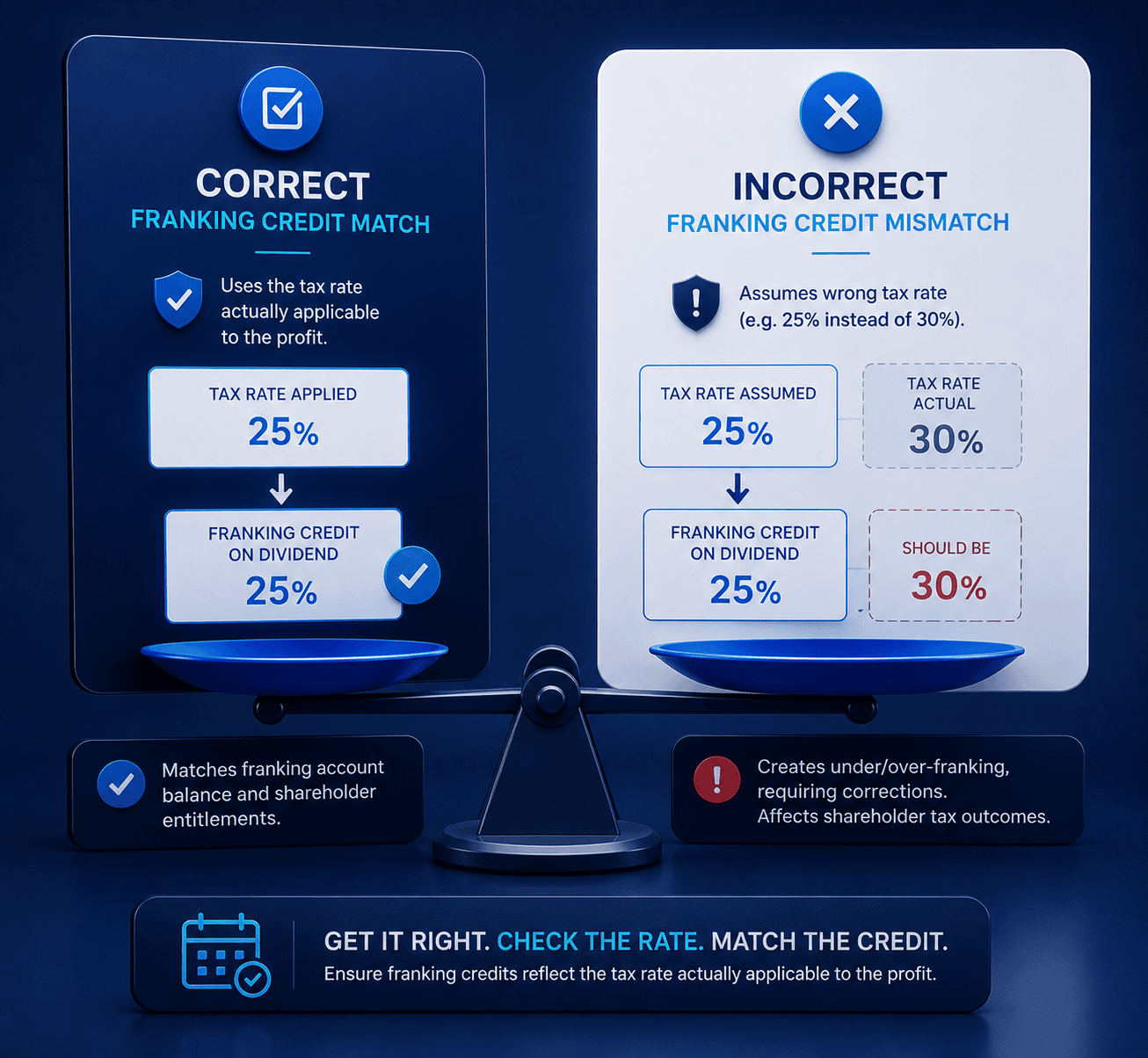
Franking credits need to match the rate actually applicable. When a company frank a dividend, the franking credit needs to reflect the tax rate the underlying profit was actually taxed at. If a company incorrectly assumes it's a base rate entity (25%) when it should have applied 30%, dividends can be under-franked or over-franked relative to what the franking account actually supports — creating a correction that flows through to shareholders' personal tax positions.
A Quick Example of Why This Matters
- Scenario: A company assumes it qualifies as a base rate entity and franks a dividend using a 25% rate. If a review later determines the company should have been taxed at 30% for that year (because the passive income test wasn't actually met), the franking credit passed to shareholders was calculated on the wrong basis — potentially leaving the company with an under-franked distribution relative to its actual franking account position, and shareholders with an incorrect tax offset on their own returns.
What to Check Each Year, Not Just Once
- Recalculate aggregated turnover annually, including all connected entities and affiliates — don't assume last year's classification automatically carries forward.
- Check the passive income percentage for the specific year, particularly if the company had any unusual capital gains, large interest income, or significant rental income that year.
- Confirm the franking rate applied to any dividends matches the company's actual base rate entity status for that year, not an assumed or previous year's status.
- Review group structure changes, since a new connected entity or a change in shareholding can affect the aggregated turnover calculation going forward.
Confirm Your Rate Before You Frank a Dividend
Given the direct flow-through effect on franking credits and shareholder tax positions, it's worth confirming your company's base rate entity status for the specific year before finalising dividends, rather than assuming the classification from a prior year still applies.
RBizz confirms base rate entity status annually as part of company tax return preparation — get in touch to check your classification is being applied correctly.