
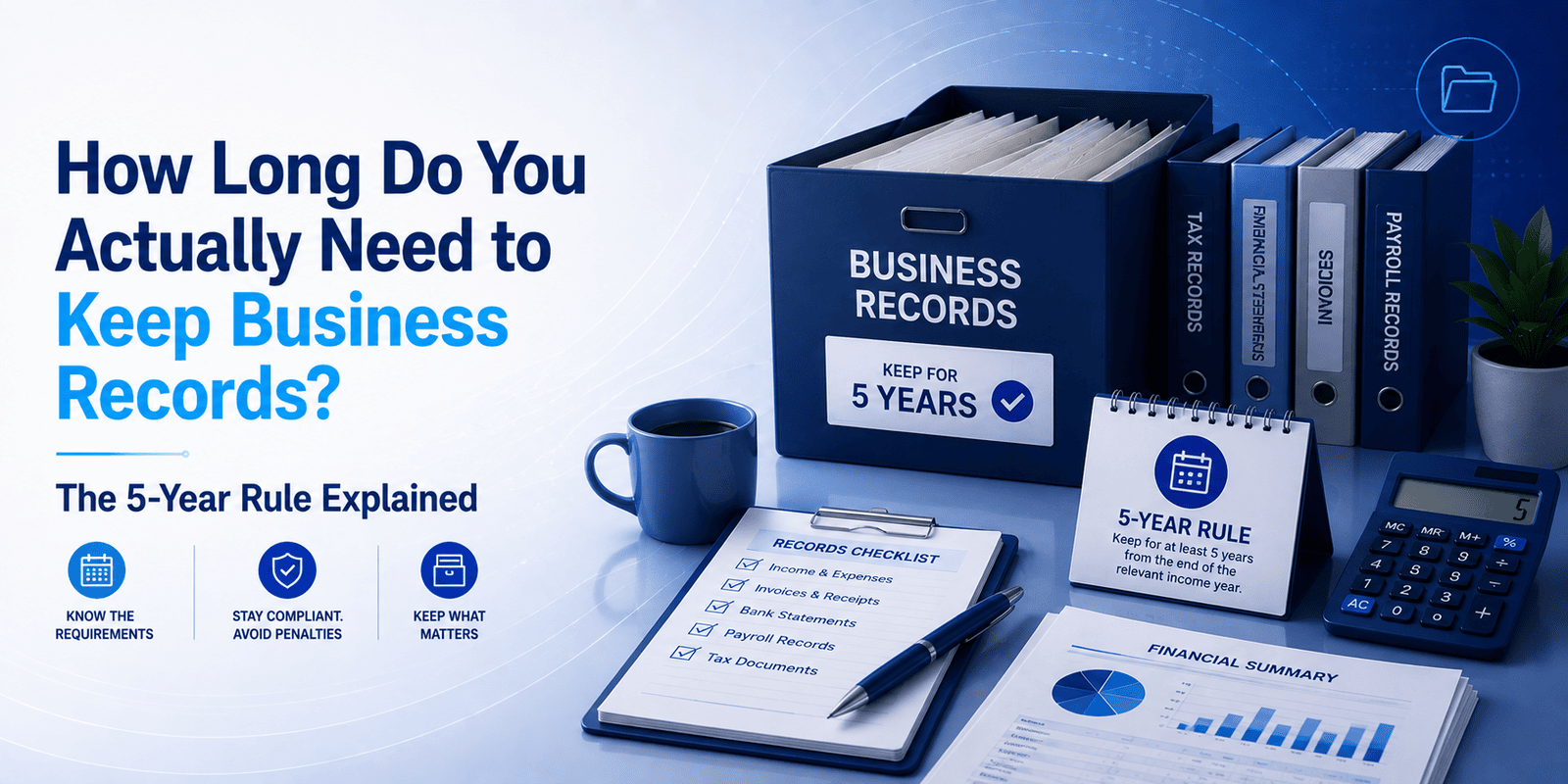
How Long Do You Actually Need to Keep Business Records? The 5-Year Rule Explained
When the Clock Actually Starts
For most records, the 5-year period runs from whichever of these is later:
- The date you prepared or obtained the record, or
- The date the transaction or acts the record relates to were completed
For records supporting a tax return, this generally means 5 years from the date you lodge that return — not 5 years from the date of the underlying transaction itself. A supplier invoice from March doesn't need to be kept for 5 years from March; it needs to be kept for 5 years from when the return relying on that invoice was lodged.
What Actually Needs to Be Kept
Where the 5 Years Can Actually Be Longer

Depreciating assets: records need to be kept for 5 years from the date of the last claim involving that asset — meaning for an asset depreciated over 10 years, the effective retention period is closer to 15 years once you add the standard 5-year tail.

Capital gains tax records: records relating to an asset subject to CGT should generally be kept until at least 5 years after you're sure no CGT event can occur — which for a long-held asset can mean retention periods well beyond the standard 5 years, potentially decades if the asset is held for a very long time before disposal.
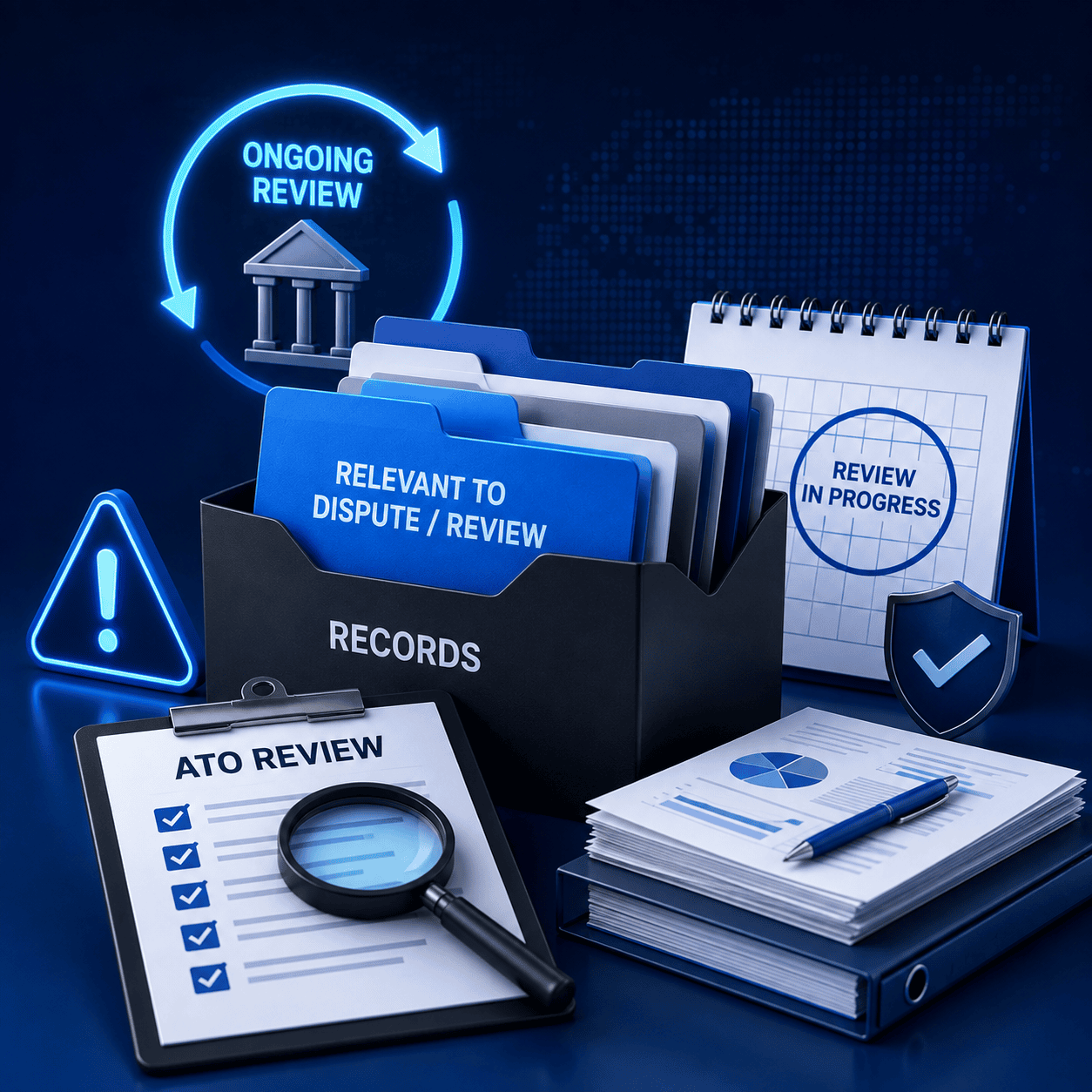
Records relevant to a dispute or ongoing review: if the ATO is actively reviewing a period, the standard clock doesn't apply the same way — retain records related to that period until the review is fully resolved, regardless of what the standard 5-year calculation would otherwise suggest.
What Happens If You Can't Produce a Record
If the ATO reviews a return and you can't substantiate a claimed deduction or a reported figure, the claim can be disallowed — meaning you retroactively owe tax on an amount you may have genuinely spent, simply because you can no longer prove it. This is a real financial cost, not just a compliance inconvenience.
A Practical Retention System
- Tag records by financial year lodged, not just the date on the document itself — this makes the 5-year calculation straightforward rather than requiring you to work it out retrospectively.
- Keep a separate, longer-retention folder for depreciating assets and CGT-relevant records, since these don't follow the standard 5-year rule.
- Digitise records where possible — physical storage for a decade-plus retention period (for depreciating assets or CGT records) becomes impractical quickly, while digital storage doesn't.
- Don't destroy anything currently under ATO review, even if the standard 5-year period has technically passed.
Check Your Retention System Before You Clean House
If you're about to do an end-of-financial-year clean-out of old records, it's worth checking which ones are genuinely past their retention period and which ones (depreciating assets, CGT-relevant records) need to stay well beyond the standard 5 years.
RBizz can review your record-keeping practices to confirm you're retaining what you need and safely clearing what you don't — get in touch before your next clean-out.