
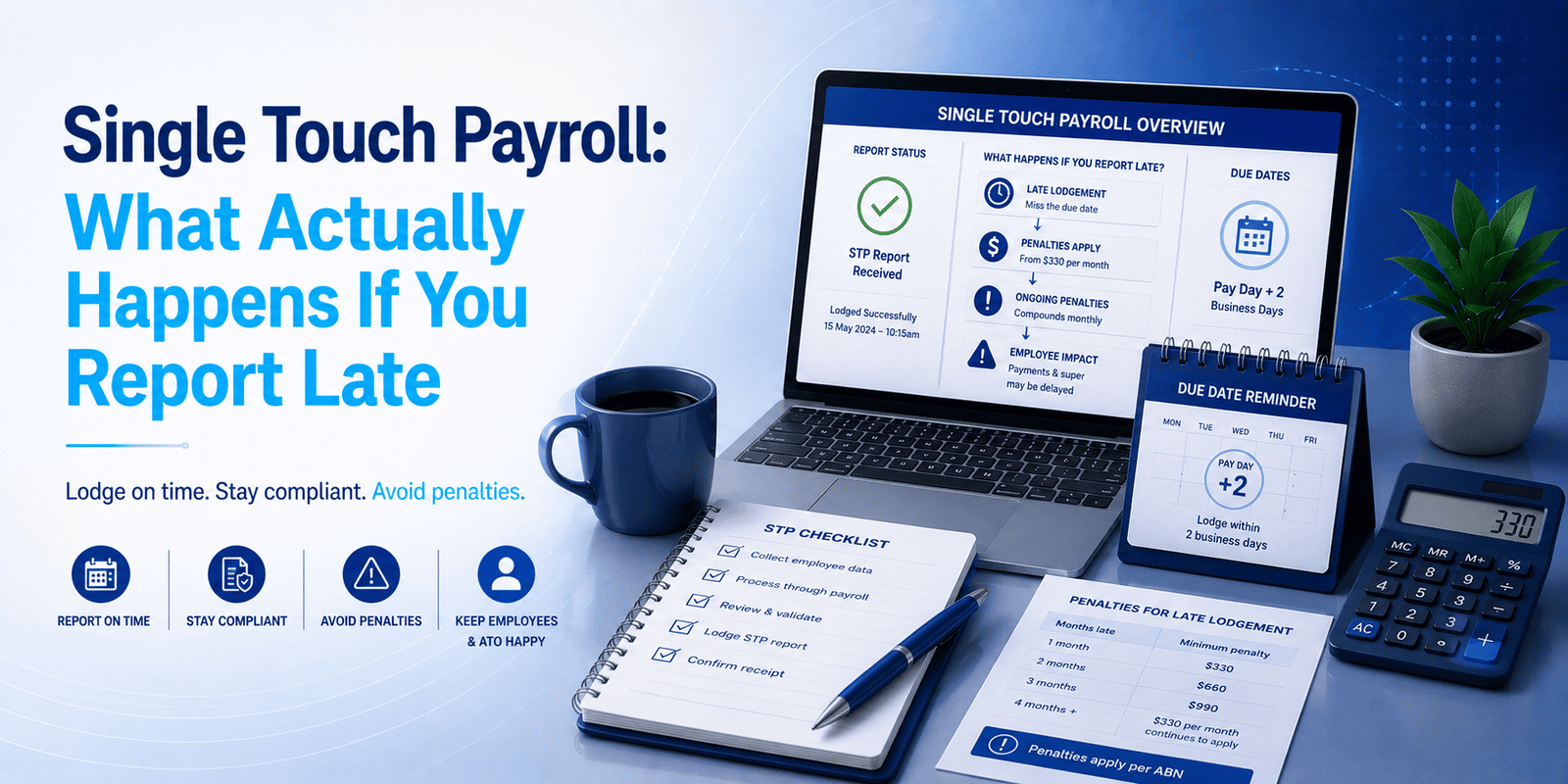
Single Touch Payroll: What Actually Happens If You Report Late
The Due Date Is Pay Day, Not Later
Under STP, the report is generally due at the same time you pay your employees — the pay event itself triggers the reporting obligation. This is a meaningfully different mental model to BAS or income tax, where there's a clear gap between the transaction and the lodgment deadline. With STP, if payday is Thursday, the report is due Thursday.
What Commonly Causes a Late Report
What Actually Happens If You're Late
For businesses generally reporting on time with an occasional, genuine one-off delay, the ATO's approach is typically not to apply penalties automatically — there's meaningful practical flexibility built into the system, particularly for new employers and isolated incidents. However, a pattern of late reporting, or a failure to report at all, can result in a failure-to-lodge penalty being applied, in the same broader category as other lodgment obligation penalties.
Where This Interacts With Other Obligations
STP data feeds directly into how the ATO cross-checks other reporting — including PAYG withholding amounts reported on your BAS and superannuation guarantee contributions. Inconsistent or late STP data can create the kind of mismatch that specifically flags a business for closer review, separate from any penalty for the late report itself.
What to Check in Your Payroll Process
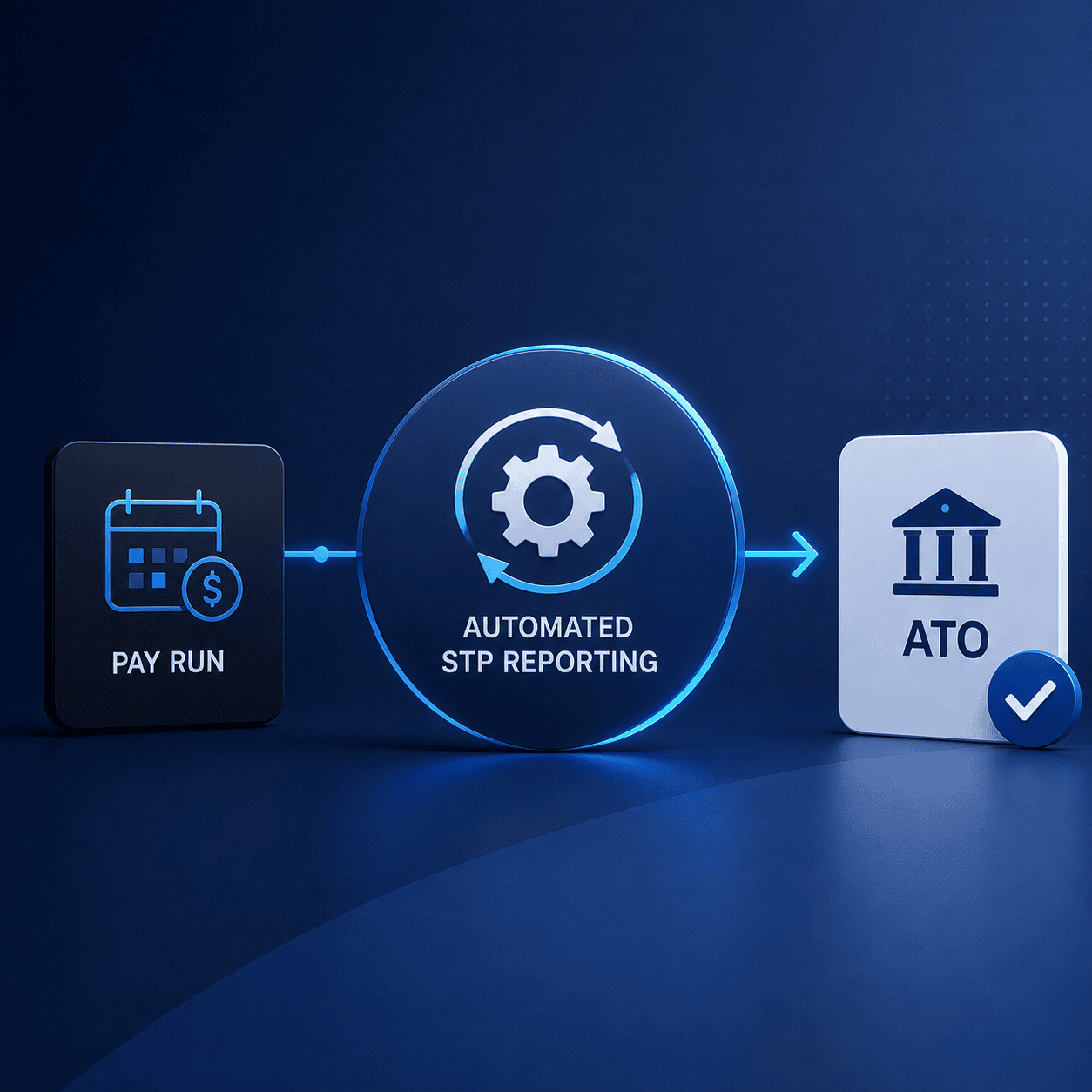
Confirm STP reporting is genuinely automated as part of processing each pay run, not treated as a manual follow-up task completed separately afterward.
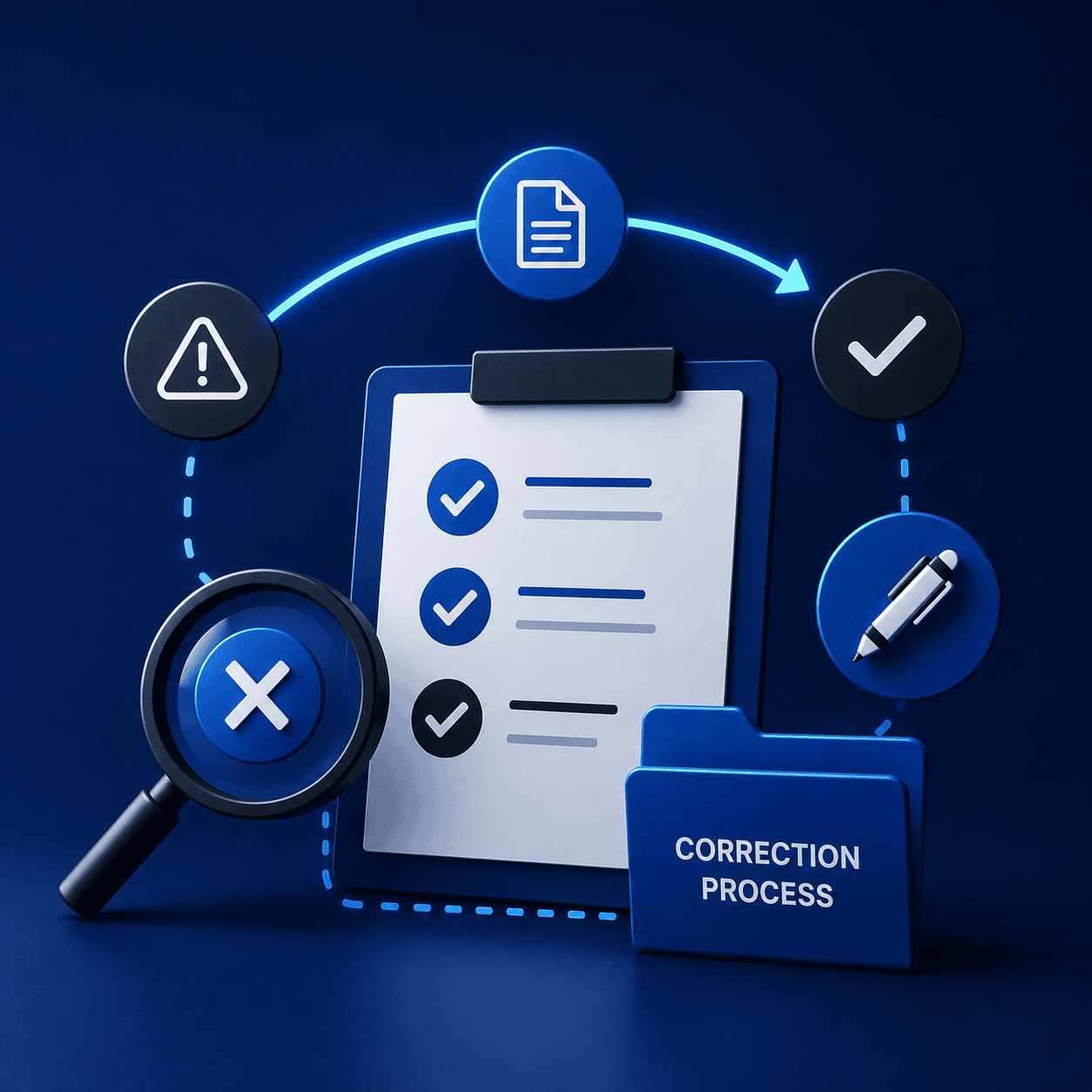
Have a documented process for correcting an error, since corrections themselves need to be reported properly, not simply fixed in the next regular pay cycle without addressing the earlier report.
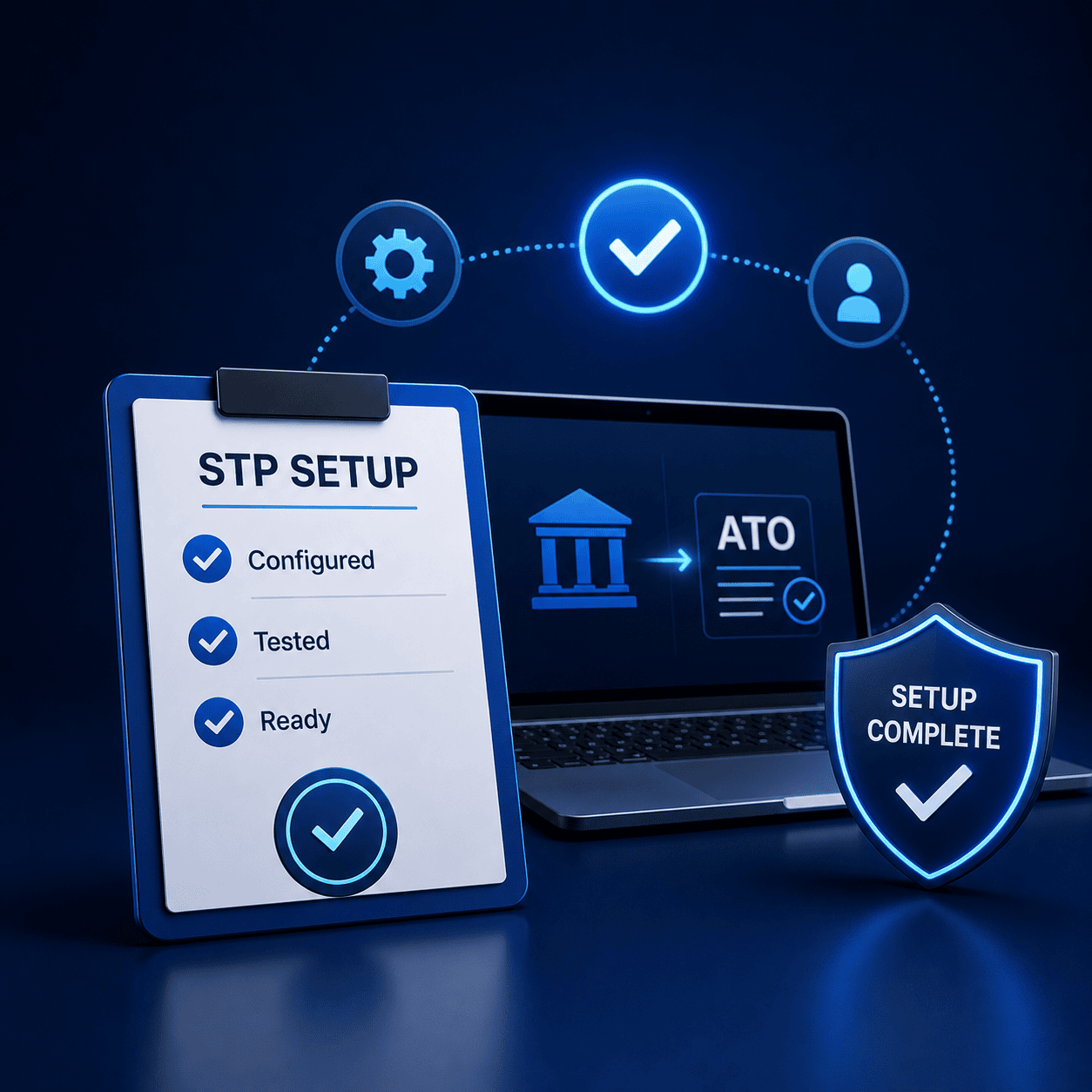
If you're a new employer, confirm your STP setup is fully configured and tested before your first live pay run, rather than discovering an issue on payday itself.

Review your STP reporting history periodically for any gaps or late submissions, since an isolated pattern can be harder to spot without a periodic check.
Reporting on Time Is Simpler Than Fixing a Pattern of Lateness
STP compliance is generally straightforward once properly configured — the risk sits almost entirely in setup and process gaps, not in the underlying rule itself being complicated. Getting the process right once removes this as an ongoing concern.
RBizz reviews payroll processes to confirm STP reporting is properly configured and genuinely tied to your pay cycle — get in touch if you're unsure your setup is compliant.