
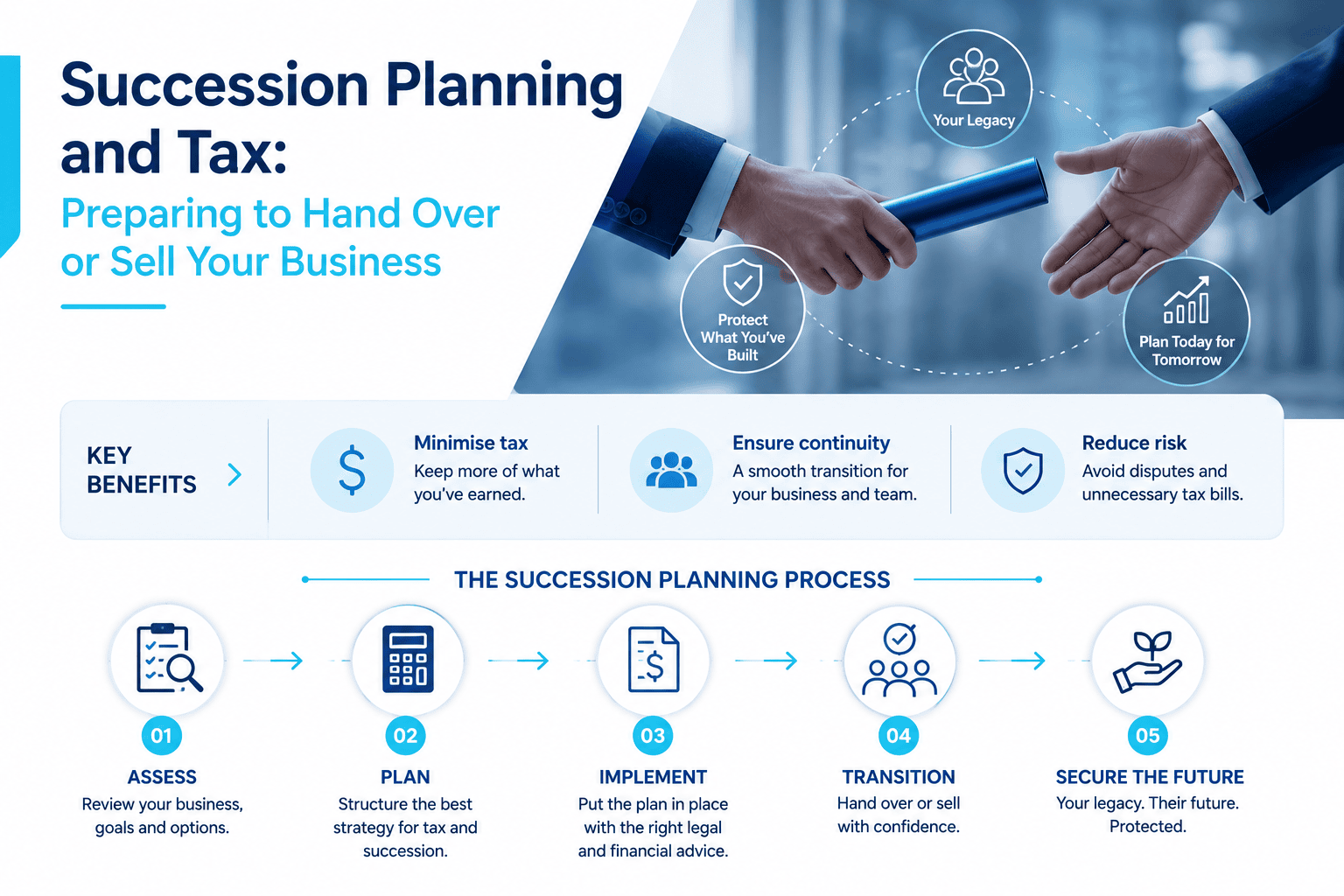
Succession Planning and Tax: Preparing to Hand Over or Sell Your Business
At some point, every business owner faces the same question: what happens to this business when I step back? Whether that means handing it to family, selling to a partner, or exiting to a third party, the tax consequences of that transition are often far more significant than owners expect — and far easier to manage when planned years ahead, rather than in the final months.
Succession planning is frequently treated as a legal or operational exercise. In reality, tax structuring is one of the most important levers determining how much value the outgoing owner actually retains.
Why Timing Changes the Outcome
The tax treatment of a business transition depends heavily on how and when it's structured — not just the final sale price or handover date. Decisions made years in advance can materially affect:
- Whether small business CGT concessions are available, which can significantly reduce or even eliminate capital gains tax on a qualifying business sale.
- How the business's structure supports or limits eligibility for those concessions, based on turnover, asset value, and ownership tests.
- Whether a share sale or asset sale is more tax-effective, which has very different consequences for both the seller and the buyer.
- How family succession is structured, particularly where a trust or company is involved and generational transfer needs to occur without triggering unnecessary tax consequences.
Common Succession Pathways and Their Tax Implications

Selling to a Third Party
A sale to an external buyer typically triggers capital gains tax on the difference between the sale proceeds and the cost base of the business or its assets. Small business CGT concessions may reduce this liability substantially, but eligibility depends on tests around turnover, net asset value, and ownership structure — tests that are far easier to satisfy with advance planning than a last-minute restructure.

Passing the Business to Family
Transferring a business to the next generation isn't automatically tax-free. Depending on the structure, this can involve capital gains tax, stamp duty, and considerations around how ownership is transferred — whether through a sale, a gift, or a staged transition of shares or units over time.

Management or Partner Buyouts
Where an existing manager or partner buys into or takes over the business, the structure of that buyout — whether funded by vendor finance, external debt, or a staged equity transfer — has its own tax profile, and can sometimes be structured to defer or manage the tax impact on the outgoing owner.

Winding Down or Ceasing Operations
Where succession isn't about a sale but a gradual wind-down, there are still tax consequences around asset disposal, distribution of retained profits, and the treatment of any final trust or company distributions.
What Advance Planning Actually Achieves
Business owners who start succession and tax planning several years before an intended exit typically have more options, not just a smaller tax bill. Early planning allows time to:
- Test and confirm CGT concession eligibility, and restructure if the business currently falls short of the relevant thresholds.
- Review whether the current business structure is fit for the intended exit method, since a structure built for operating the business day-to-day isn't always optimal for selling or transferring it.
- Plan the timing of the transition around personal circumstances, business performance, and tax year considerations, rather than being forced into a rushed timeline.
- Prepare the business commercially, since buyers and successors alike will scrutinise financials, and a business with clean, well-documented records commands more value and moves through due diligence more smoothly.
- Involve the right advisers early — succession planning typically benefits from tax, legal, and sometimes financial planning input working together, rather than being addressed by one adviser after decisions have already been made.
The Cost of Leaving It Too Late
Start the Conversation Before You Need To
Succession doesn't have to happen soon for the planning to matter. The businesses that achieve the best outcomes are the ones that start the conversation years, not months, before the transition takes place.
RBizz helps business owners plan succession and exit strategies with tax outcomes built in from the start — schedule a free consultation to explore your options.