
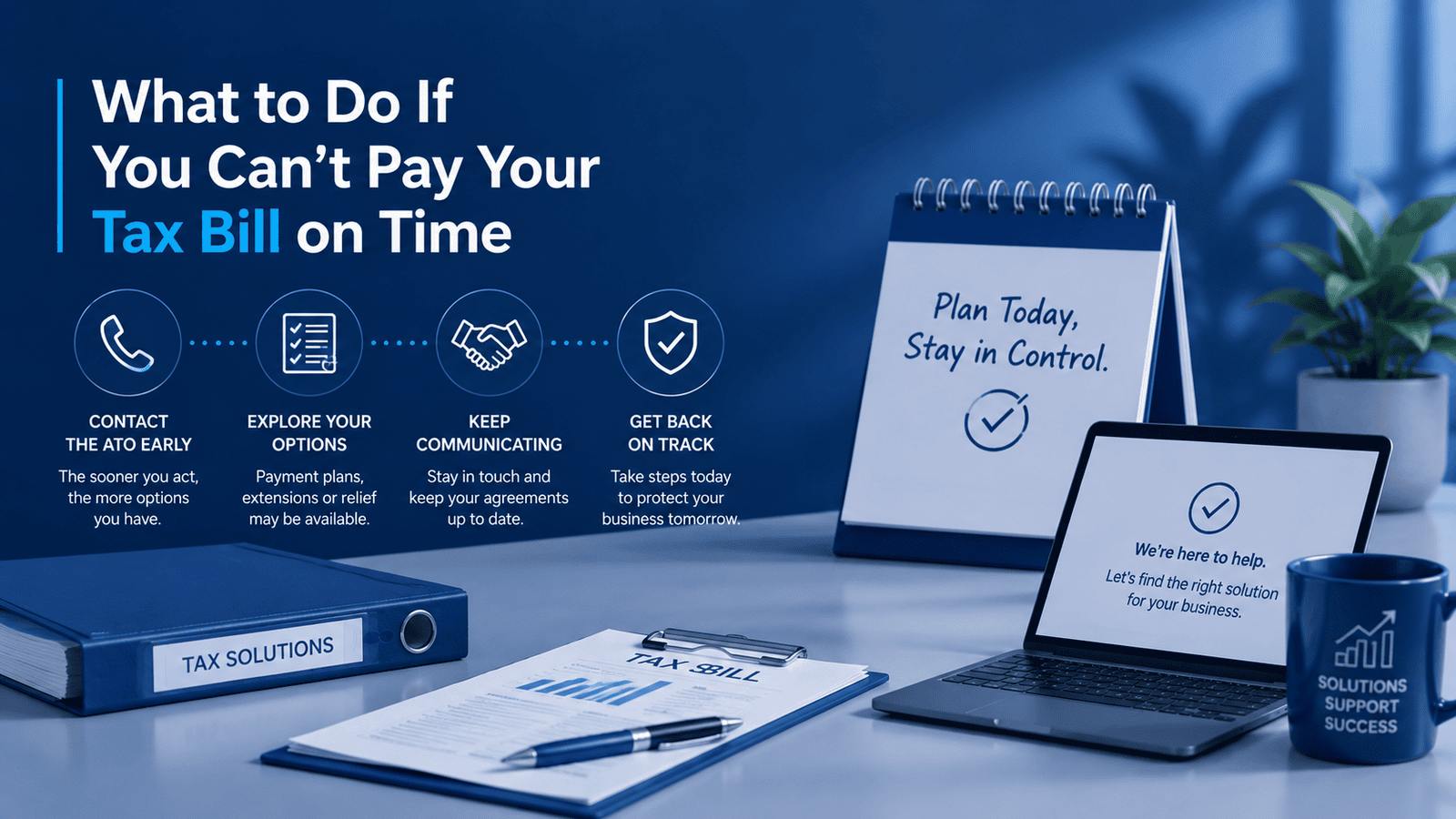
What to Do If You Can't Pay Your Tax Bill on Time
A tax bill you can't pay in full is one of the most stressful moments in running a business — and one of the most common. Cash flow timing, a slower quarter, or an unexpectedly large bill can all leave a business short when a payment is due.
The good news: this situation is far more manageable than most business owners assume, provided it's addressed early. The businesses that get into real trouble aren't usually the ones who couldn't pay — they're the ones who went quiet and hoped it would sort itself out.
What Actually Happens If You Don't Pay
If a tax bill goes unpaid past the due date, two things typically start accruing:
- General interest charge (GIC), which compounds daily on the outstanding amount.
- Potential compliance action from the ATO if the debt remains unaddressed for an extended period, which can escalate to garnishee notices, director penalty notices, or legal recovery action in serious cases.
Importantly, these consequences scale with how long the situation is ignored — not simply with the fact that a payment was missed. A short delay handled proactively looks very different to a debt left unmanaged for months.
2. Depreciation on Assets
1. Contact the ATO (or have your accountant do it) before the due date
The ATO is generally far more flexible when a business reaches out ahead of time rather than after falling behind. Reaching out early signals that the non-payment is a timing issue, not an avoidance issue.
2. Set up a payment plan
The ATO offers structured payment plans that allow a debt to be paid off in instalments rather than as a lump sum. Eligibility and terms depend on the size of the debt and your compliance history, but this is a well-established, commonly used option — not a red flag on your record.
3. Review your cash flow, not just the tax bill
A missed tax payment is often a symptom of a broader cash flow timing issue. Addressing the root cause — invoicing cycles, payment terms, or seasonal revenue gaps — reduces the chance of the same situation recurring next quarter.
4. Check if remission of interest or penalties is possible
In some circumstances, particularly where there's a genuine and demonstrable reason for the delay, the ATO can consider remitting some interest or penalties. This isn't guaranteed, but it's worth raising as part of a broader conversation with your accountant.
5. Don't ignore ATO correspondence
Letters, SMS reminders, or portal notices about an outstanding debt are far easier to deal with in the first 30 days than after several rounds of escalation. Responding — even just to say a plan is being arranged — keeps the situation manageable.
Why Early Action Changes the Outcome
The difference between a manageable tax debt and a serious compliance problem is almost always timing. Business owners who engage early:
- Have more payment plan flexibility
- Face lower cumulative interest charges
- Avoid escalation to firmer recovery action
- Keep the situation as a conversation, not a dispute
You Don't Have to Sort This Out Alone
If you're behind on a tax bill — or you can already see one coming that you won't be able to cover — the earlier you get advice, the more options you have. This is one of the most common situations we help clients manage, and it's rarely as dire as it feels in the moment.
RBizz can help you set up a payment plan, manage ATO communication, and get your cash flow back on track — schedule a free consultation.