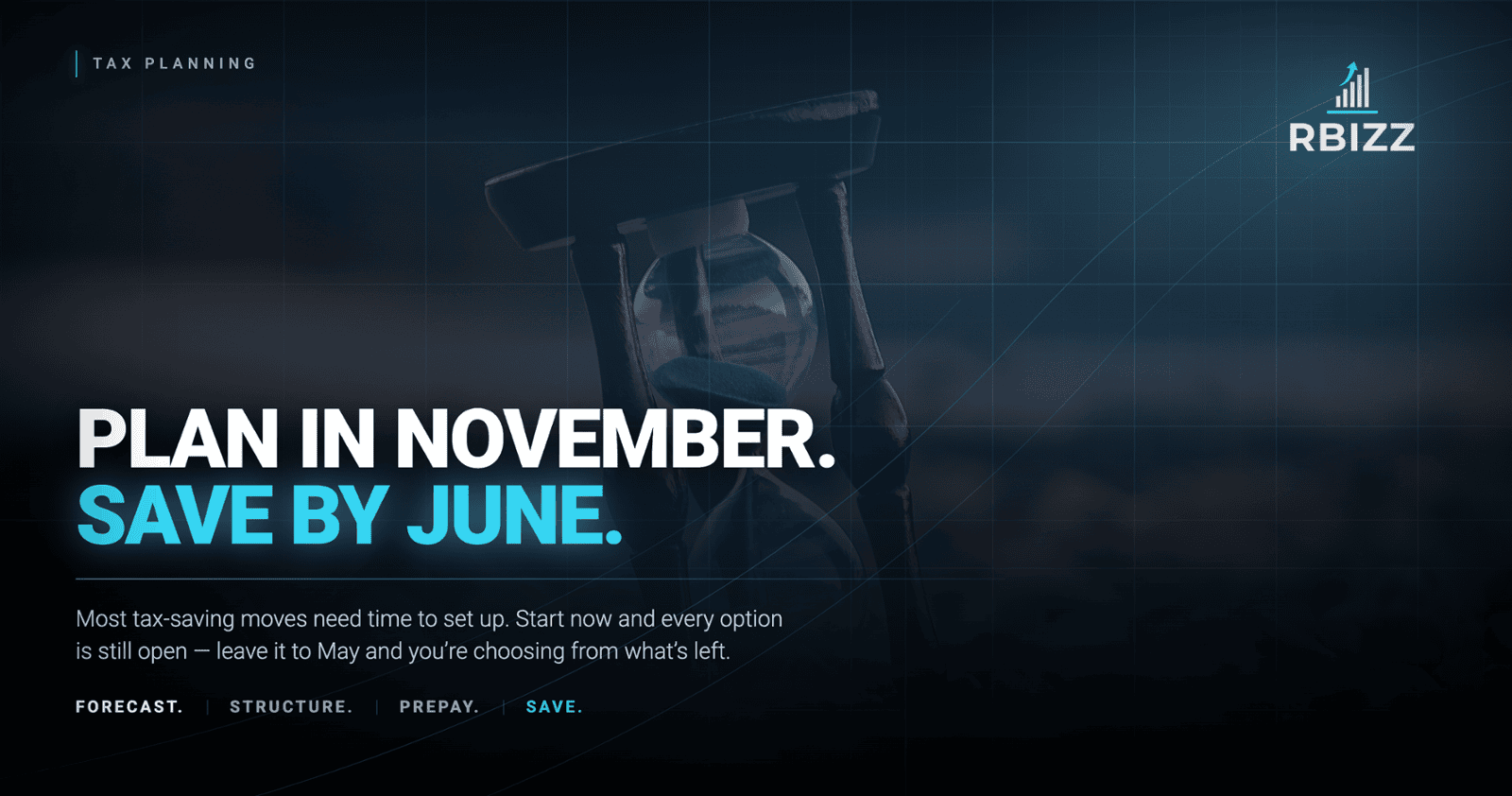
You Have Eight Months Until 30 June. The Best Tax Savings Are Found in the First Five.
Year-end tax planning usually happens in the last few weeks of the financial year. By then, a lot of the useful decisions have already been made by default. Acting in the first half of the year means more options, more time to implement them, and less of the pressure that leads to rushed purchases.
Many small businesses assume one person covers everything: record the numbers, lodge the returns, give advice. When that assumption is wrong, the gap tends to show up as missed deductions, surprise tax bills and decisions made without good numbers.
Why Early Planning Works Better
In June, you can only change what is left to change. In October, you can still shape the year: when to buy, how to fund it, how to pay yourself, and whether the structure still fits.
What to Look At Now
- Where the year is heading. Compare year-to-date profit against last year. An estimate of the likely tax position is the starting point for every other decision.
- PAYG instalments. If the year is tracking differently from last year, the instalments may be too high or too low. Reviewing them now avoids a refund tied up for months or a shortfall at lodgment.
- Planned purchases. Equipment, vehicles and fit-outs are better timed around cash flow and tax outcome together, not bought in a rush in June.
- How you pay yourself. The mix of salary, dividends and super contributions affects your personal tax. Changing the pattern is easier early than late.
- Superannuation contributions. Contribution caps and deduction timing both matter. Spreading contributions over the year can be easier than a single large payment, but check your cap position first.
- Bad debts and stock. Reviewing what will not be collected or sold now gives you time to deal with it properly.
What Early Planning Does Not Mean
It does not mean spending money to save tax. A deduction costs you the amount you spend, so only purchases the business needs make sense.
A Simple Plan
- Ask for a mid-year estimate of the tax position.
- List planned purchases and contributions for the rest of the year.
- Review instalments and the pay mix against that estimate.
RBizz runs mid-year tax estimates so planning happens while the options are still open. Get in touch to book yours before the end of the year rush.