
Blog tagged as Tax

Year-end tax planning in June can only change what is left, while acting in the first half of the year keeps purchases, pay mix, instalments and contributions all open to adjustment.
RBizz Team
30/10/2026 06:28 PM - Comment(s)

A structure chosen at the start rarely fits after growth in profit, staff, risk or ownership, so a review is worth asking for before any change triggers its own tax costs.
RBizz Team
30/10/2026 06:28 PM - Comment(s)
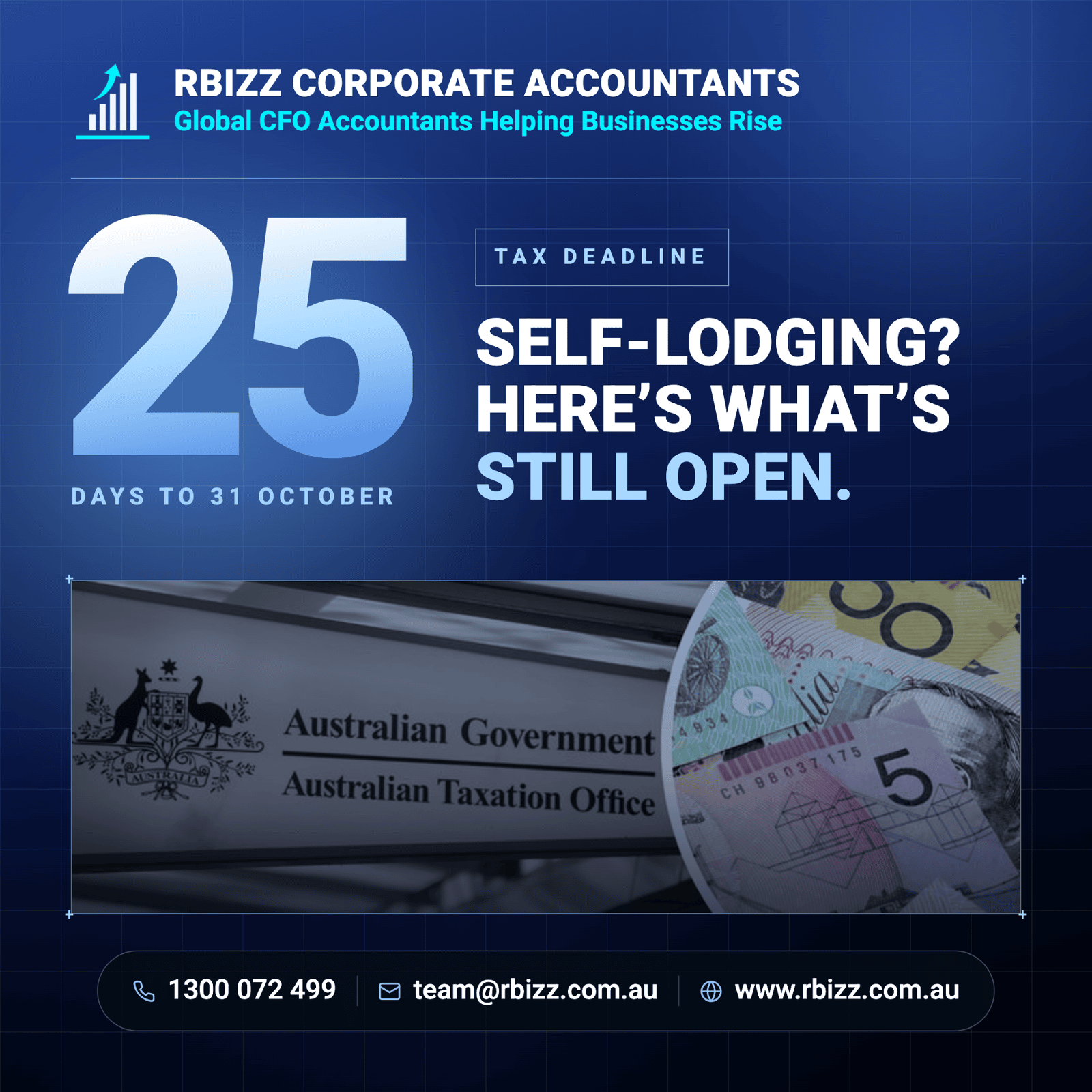
Self-lodgers usually have until 31 October, and the returns that run late are rarely held up by the lodging itself but by records nobody gathered earlier.
RBizz Team
13/10/2026 10:43 AM - Comment(s)

Ownership, funding and the date an asset is ready for use all shape the tax outcome, and each is decided before the contract is signed, not when the records reach the accountant.
RBizz Team
13/10/2026 10:43 AM - Comment(s)

A bargain lodgment fee usually means nobody looked beyond what you handed over — no deduction review, no structuring check, no planning — and the tax overpaid from that silence often dwarfs the fee saved.
RBizz Team
25/09/2026 04:17 AM - Comment(s)
A purely reactive, compliance-only relationship structurally can't find tax savings — those only surface through genuine, forward-looking conversations about structure, timing, and deductions that most businesses never actually have.
RBizz Team
15/09/2026 01:45 PM - Comment(s)
A surprise tax bill isn't bad luck — it's a sign nobody was tracking your position throughout the year, when a properly run relationship means you already know roughly what's coming months before lodgment.
RBizz Team
15/09/2026 01:44 PM - Comment(s)

A large tax refund feels like good news, but it almost always means you overpaid throughout the year and got nothing for the government holding your money in the meantime — the real fix is recalibrating PAYG instalments, not celebrating the refund.
RBizz Team
29/08/2026 11:21 PM - Comment(s)

Tax season exposes the real difference between compliance-only accounting and having CFO-level guidance on hand.
RBizz Team
27/07/2026 01:39 PM - Comment(s)

Tax season stress usually stems from uncertainty, not the tax itself — and that's the gap RBizz Corporate Accountants exists to close for Australian businesses.
RBizz Team
24/07/2026 02:15 PM - Comment(s)

Tax season obligations differ significantly depending on whether you operate as a company, partnership/trust, or sole trader. This guide breaks down what each structure needs to prepare, watch out for, and lodge — with a practical checklist that applies across all three.
RBizz Team
09/07/2026 06:18 PM - Comment(s)

Tax may be boring, but smart use of tax planning is a superb way to help your company do more with your money.
RBizz Team
06/07/2026 10:44 AM - Comment(s)
Categories
- News Alerts
(103)
- Templates
(2)
- Guides
(288)
- Blogs
(174)
- Courses
(0)
- Health Checks
(0)
- Calculators
(0)
- Videos
(0)
- Compliance
(65)